Meaningful Veterans Day gifts for employees should reflect individual preferences, respectfully recognize military service, and offer something recipients genuinely appreciate. Employers can consider personalized keepsakes, premium drinkware, practical accessories, curated gift boxes, or flexible rewards. However, the most important part of veteran recognition is not the merchandise itself. It is the respect, consideration, and sincerity behind the gesture.
Veterans Day, observed annually on November 11, provides an opportunity for organizations to acknowledge colleagues who have served in the United States Armed Forces. For HR leaders and employee recognition teams, the challenge is deciding how to express that appreciation appropriately across employees who may have very different experiences and expectations.
Some veterans welcome public recognition and commemorative gifts. Others prefer private acknowledgment, practical merchandise unrelated to military service, or no individual attention. A thoughtful employer should recognize these differences rather than assume one approach will suit everyone.
This guide explains how employers can honor veterans at work, choose meaningful appreciation gifts, communicate respectfully, and organize recognition programs for office-based, remote, and frontline employees. It also explores how companies can extend their support beyond Veterans Day while avoiding common mistakes that undermine otherwise well-intentioned initiatives.
What Does Respectful Veteran Recognition Look Like in the Workplace?
Respectful veteran recognition acknowledges military service while preserving employees’ dignity, privacy, and freedom to choose how they participate. It recognizes that military service may be an important part of someone’s identity without assuming that it defines their interests, personality, professional abilities, or preferred treatment at work.
According to the U.S. Census Bureau, approximately 15.7 million military veterans lived in the United States in 2025, representing 5.9% of the civilian population aged 18 and older. This figure illustrates the size and diversity of the veteran population, although it does not represent the number of employed veterans.
That diversity matters in workplace recognition.
Veterans may have served in different military branches, occupational specialties, locations, and periods. Their reasons for joining, experiences during service, and feelings about public acknowledgment may also differ considerably.
For employers, effective recognition begins with understanding the person rather than relying on assumptions about military experience.
Recognize Military Service Without Stereotyping Employees
A veteran working in technology may prefer the same professional accessories as other employees in their department. Someone working in healthcare might appreciate a practical item suited to their schedule, while another employee may value a commemorative keepsake.
These preferences should not be predicted from military background alone.
Employers should also avoid automatically describing veterans as exceptionally disciplined, resilient, or natural leaders. Although military experience can develop valuable professional skills, broad generalizations may unintentionally reduce individuals to a stereotype.
Instead, recognition can acknowledge military service directly while separately appreciating the employee’s current professional contributions.
The Wounded Warrior Project Veteran Employee Recognition Guide encourages employers to involve veteran employees in recognition planning, consider employee feedback, and establish activities that fit their organization. Its recommendations provide a useful starting point for employers developing thoughtful programs.
Ask Before Recognizing Veterans Publicly
Public recognition may be meaningful for employees who welcome it, but military service should not automatically become information shared with an entire organization.
An employee may be comfortable receiving a private appreciation message yet prefer not to appear in an internal newsletter, company-wide announcement, or social media campaign.
Before sharing someone’s military background, service history, photograph, or personal experiences, employers should request specific permission.
Consent should also be limited to the intended use. Agreeing to recognition during a team meeting does not necessarily mean an employee has agreed to appear in a public marketing campaign.
Private recognition offers an appropriate alternative. A thoughtful note from a manager, an optional appreciation gift, or a personal conversation can acknowledge military service without creating unnecessary attention.
Understand the Difference Between Veterans Day and Memorial Day
Veterans Day and Memorial Day are both important U.S. observances, but they recognize different aspects of military service.
Veterans Day occurs on November 11 and honors people who served in the U.S. Armed Forces, particularly recognizing living veterans while also remembering those who have died.
Memorial Day, observed on the last Monday in May, specifically honors military personnel who died while serving.
The U.S. Department of Veterans Affairs and U.S. Department of Defense explain these distinctions.
Employers should use language appropriate to the occasion. A Veterans Day message should acknowledge service and appreciation without confusing the observance with Memorial Day.
What Are Meaningful Veterans Day Gifts for Employees?
The best Veterans Day appreciation gifts combine personal relevance, everyday usefulness, and appropriate presentation. Practical products such as premium notebooks, insulated drinkware, comfortable apparel, travel accessories, and curated gift packages can be suitable choices when employees have expressed an interest in receiving them.
Gift selection should begin with the recipient’s preferences rather than an assumption that military-themed merchandise is required.
A commemorative item may be meaningful to one veteran, while another may prefer something unrelated to military service. In some circumstances, providing several appropriate options may be more considerate than distributing the same product to everyone.
The following categories offer practical starting points for employers evaluating Veterans Day gifts.
1. Personalized Appreciation Gifts That Feel Individual

Personalized gifts can create a meaningful recognition experience when the personalization reflects the recipient rather than merely displaying a corporate logo.
For example, a quality notebook accompanied by a handwritten message can acknowledge military service without turning the gift into an elaborate promotional item.
The message could express appreciation for the employee’s service and recognize their ongoing contributions to the organization.
For employees who enjoy writing, planning, or maintaining personal journals, BlinkSwag’s Karst Pro Series Notebook is a worthwhile option.
The notebook features stone-paper pages, organizational elements, and an expandable pocket. Its professional design makes it suitable for everyday use beyond a single recognition occasion.
However, personalization does not necessarily require engraving someone’s name, military branch, or service dates onto merchandise.
Employers should avoid using sensitive or personal military information as decoration unless the recipient has specifically requested it.
A carefully written message may provide more personal significance than additional customization.
2. Premium Drinkware for Everyday Comfort

Insulated drinkware can be a useful Veterans Day gift for employees who regularly carry coffee, tea, or other beverages.
A durable bottle or travel mug may serve someone during commuting, office hours, travel, or personal activities.
For example, the Hydro Flask Wide Mouth 20 oz Bottle with Flex Sip Lid is available through BlinkSwag’s catalog. The product provides a compact drinking option with a leak-resistant lid design and supports available decoration methods.
Employers considering drinkware should evaluate practical factors such as capacity, portability, cleaning requirements, and the recipient’s preferred beverages.
Product quality matters, but so does avoiding unnecessary duplication. Someone who already owns several reusable bottles may appreciate a different gift more.
Offering a limited selection of useful alternatives can help organizations avoid distributing merchandise that recipients are unlikely to use.
3. Comfortable Apparel and Lifestyle Gifts

Apparel may be appropriate for employees who value comfortable clothing and have an opportunity to select suitable sizes and styles.
A quality fleece jacket, sweatshirt, or lightweight outerwear can be useful beyond Veterans Day, particularly when the design remains understated.
Employers can explore relevant options through BlinkSwag’s outerwear catalog.
However, clothing introduces additional considerations that do not apply to many other gift categories.
Sizing, climate, personal style, and accessibility should influence selection. A standardized garment may be less appropriate when employees have significantly different preferences or live in different regions.
Employers should also consider how much branding belongs on a recognition gift.
An item covered in corporate slogans may communicate more about the organization than the employee being recognized. Subtle branding, where available, can preserve the product’s everyday usefulness.
Military symbols should remain optional rather than automatically appearing on every item.
4. Travel Bags and Practical Everyday Accessories
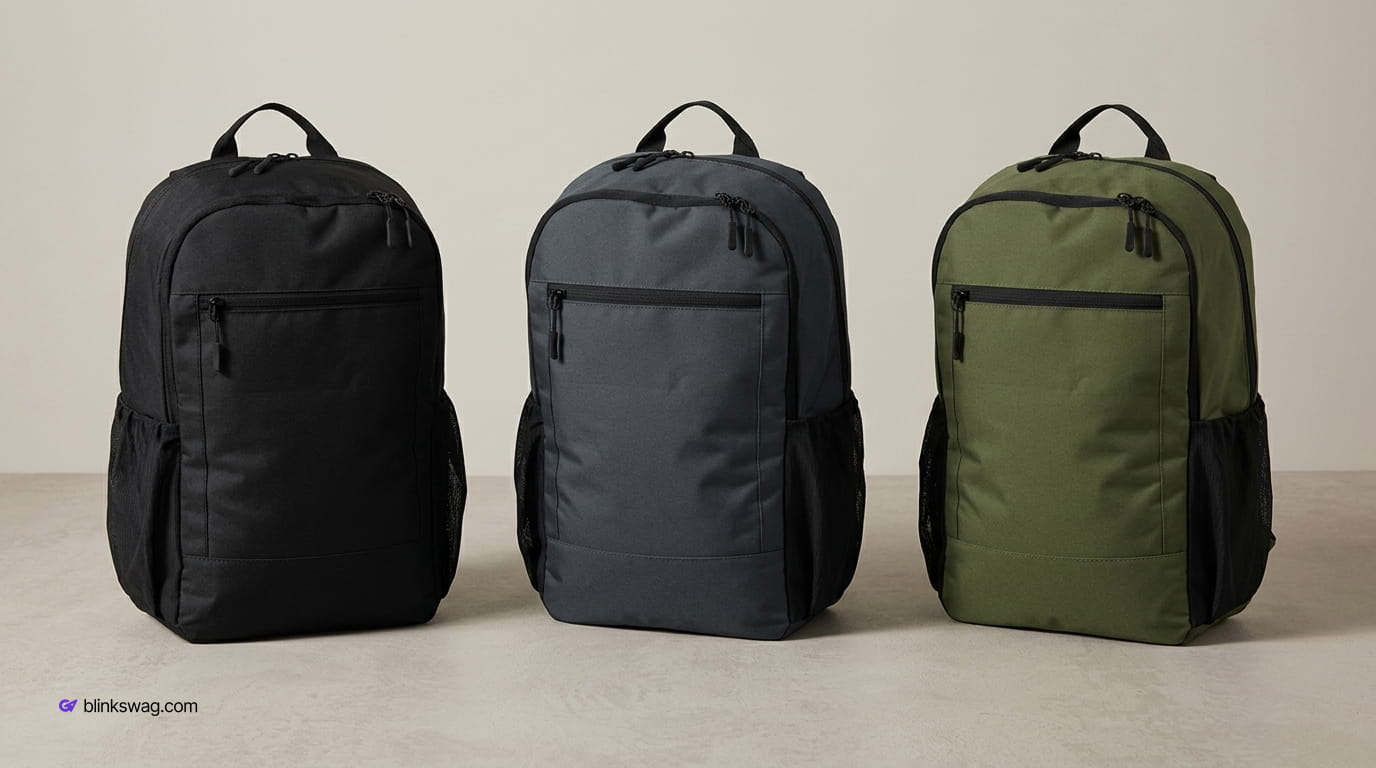
Backpacks, travel organizers, and other useful accessories can make appropriate appreciation gifts when they align with recipients’ actual needs.
An employee who commutes with a laptop may appreciate a professional backpack with practical storage compartments. Someone who travels frequently could prefer a compact organizer or versatile personal bag.
BlinkSwag offers relevant options within its backpack collection.
These products should be selected based on lifestyle and utility rather than assumptions that veterans naturally prefer rugged or military-inspired equipment.
A veteran working in an office, for example, may have no interest in a tactical-style backpack.
Employers should evaluate whether the gift suits the employee’s current circumstances, not an imagined connection to past military service.
5. Technology Accessories That Solve Everyday Problems

Technology accessories can be appropriate when they offer a practical benefit and are compatible with the recipient’s devices.
Potential options include wireless charging accessories, portable power banks, and compact organizational tools.
Employers can explore these categories through BlinkSwag’s collection of technology and tools.
However, technology gifts should be evaluated more carefully than their appearance might suggest.
Device compatibility, charging standards, portability, and actual usefulness affect whether a product provides value.
Employers should also avoid presenting essential work equipment as a special appreciation gift. A laptop charger or accessory that an employee requires to perform assigned responsibilities should ordinarily be treated as necessary workplace equipment.
Recognition merchandise should provide something beyond the organization’s normal operational obligations.
6. Curated Appreciation Gift Boxes

A carefully arranged gift box can combine several complementary items into a coherent appreciation experience.
For example, an employer might select premium drinkware, a small notebook, and a personal appreciation card. Another option could focus on coffee, tea, or suitable refreshments.
The goal should be to create a thoughtful combination rather than fill a package with as many promotional products as possible.
BlinkSwag’s curated gifting catalog includes gift sets, care packages, coffee and tea selections, wellness products, and other categories that employers can evaluate.
When considering food or wellness products, employers should account for dietary requirements, allergies, accessibility, and personal preferences.
A recognition package should never assume that everyone enjoys the same refreshments or lifestyle products.
Employers planning larger programs may also consider allowing employees to choose among curated packages.
This provides variety without requiring HR teams to create a unique assortment for every recipient.
7. Gift Cards and Recipient-Choice Rewards
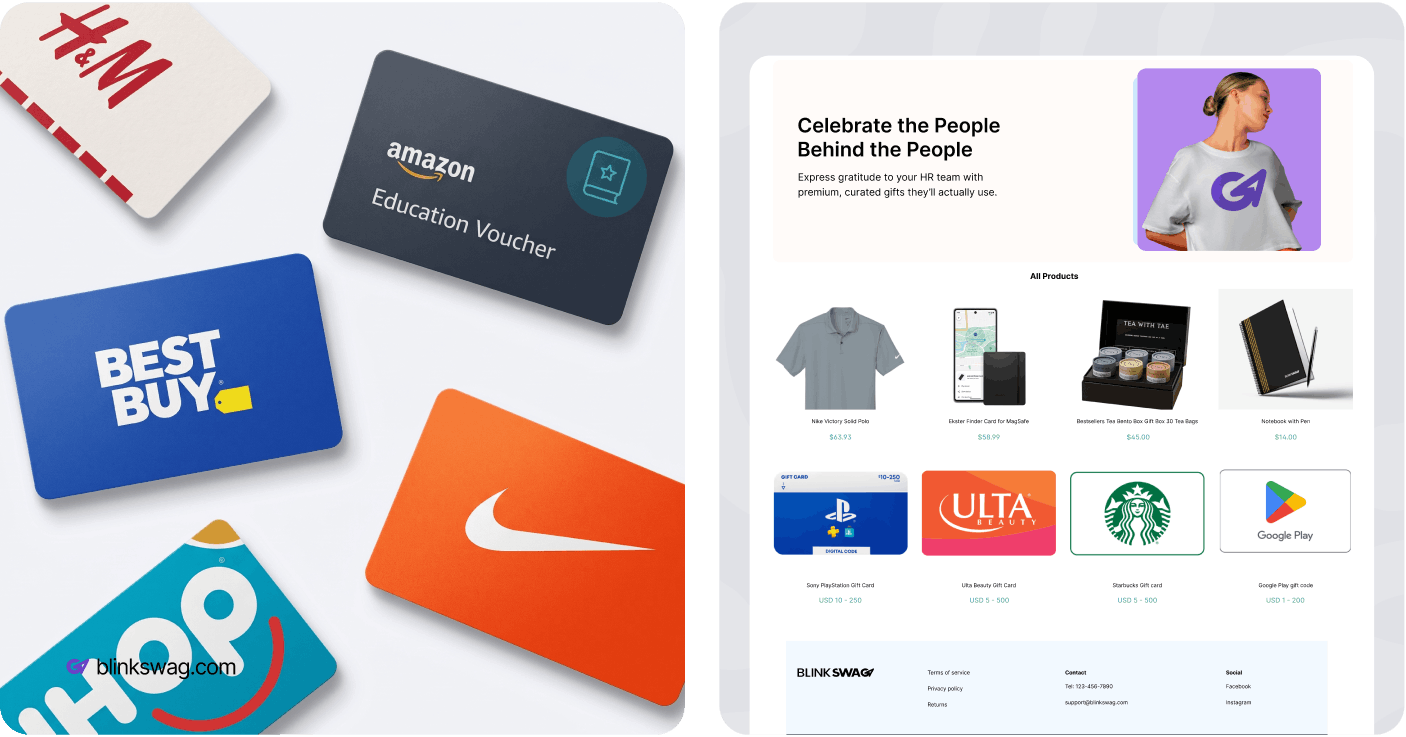
Some employees may prefer the flexibility of selecting their own gift rather than receiving predetermined merchandise.
Gift cards, approved product collections, and recipient-choice rewards can accommodate diverse needs while enabling organizations to set spending limits.
BlinkSwag supports employee-choice gifting programs through its employee gifting platform, allowing employers to offer approved collections and manage budgets.
Recipient choice can be particularly useful when employees work across different locations, have varied personal preferences, or prefer different merchandise styles.
However, employers should review the tax and payroll implications of their selected reward format before purchasing.
Gift cards and other cash-equivalent benefits generally receive different treatment from certain qualifying low-value noncash gifts. The IRS explains these distinctions in Publication 15-B.
The practical lesson is that flexibility can improve gift suitability, but the purchasing and administrative arrangements should be reviewed as carefully as the products themselves.
How Should Employers Choose the Right Veterans Day Gift?
Employers should choose Veterans Day gifts by considering employee preferences, practical usefulness, recognition boundaries, accessibility, personalization, and delivery requirements. A thoughtful selection process helps organizations distinguish gifts that provide genuine value from merchandise that merely satisfies a purchasing requirement.
The most effective approach is to consider the recognition experience before the product category.
For example, an employee who prefers private acknowledgment may appreciate a personal note and a useful gift delivered discreetly. Another employee may welcome a commemorative item that reflects their service.
A third employee may prefer no physical gift.
These choices should remain equally acceptable within an appropriately designed recognition program.
Veterans Day Gift Selection Guide for Employers
| Employee preference or situation | Suitable recognition approach | What the employer should consider |
| Prefers private appreciation | Personal message with an optional gift | Avoid unwanted public identification |
| Values practical merchandise | Drinkware, notebooks, or useful accessories | Confirm the product is relevant |
| Appreciates commemorative recognition | Personalized keepsake | Confirm interest in military-themed designs |
| Prefers personal choice | Approved gift collection or flexible reward | Review spending controls and applicable tax rules |
| Works remotely | Direct delivery or digital acknowledgment | Confirm delivery and privacy arrangements |
| Works rotating shifts | Flexible recognition and redemption opportunities | Avoid excluding employees from scheduled activities |
| Prefers nonmaterial appreciation | Personal acknowledgment or voluntary community activity | Respect the decision not to receive merchandise |
The selection process should remain proportionate to the organization’s size.
A small employer may be able to discuss recognition preferences directly with participating employees. A larger organization may need a confidential preference form or approved gift-selection experience.
Where appropriate, veteran employee resource groups can offer voluntary input during planning.
However, no single employee or group should be expected to represent every veteran’s preferences.
How Can Employers Recognize Veterans Without Making Them Uncomfortable?
Respectfully recognizing military service requires employers to protect individual boundaries. Employees should have control over whether they participate, what personal information is shared, and whether they receive public acknowledgment.
This is particularly important because well-intentioned recognition activities can create unintended pressure.
Make Military-Service Disclosure Voluntary
Employers should not assume that every veteran has disclosed their military background or wants that information used for workplace recognition.
A voluntary invitation is generally more appropriate than asking managers to identify veterans from personnel records without considering the purpose and authorization for that use.
Organizations should also avoid requesting military discharge documents or detailed service histories merely to determine who receives an appreciation gift.
Where eligibility verification is necessary under a formal program, HR should establish a proportionate process consistent with applicable laws and internal policies.
Avoid Mandatory Storytelling
Veterans should not be expected to discuss deployments, combat experiences, injuries, or personal sacrifices during workplace events.
Some employees may enjoy sharing aspects of their service. Others may consider those experiences private.
Employers can invite voluntary participation without requiring employees to become speakers, answer personal questions, or represent military service on behalf of their colleagues.
Respect Employees Who Decline Recognition
An employee who declines a gift, event invitation, or public acknowledgment should not be treated as unappreciative.
Declining participation may reflect personal preferences, scheduling constraints, or circumstances the employee does not wish to explain.
The employer’s responsibility is to create an appropriate opportunity for recognition, not to require a particular response.
What Should Employers Say to Veterans on Veterans Day?
A respectful Veterans Day message should sincerely acknowledge military service, avoid assumptions about personal experiences, and allow employees to accept appreciation without feeling obligated to respond.
The wording should reflect the relationship between the sender and recipient.
A manager writing privately to an employee can use a more personal tone than an organization issuing a company-wide statement.
A Personal Message From a Manager
Thank you for your military service and for the contributions you make to our team. We appreciate the opportunity to work alongside you and recognize your service this Veterans Day.
This message acknowledges service without claiming to understand the employee’s individual experiences.
A Company-Wide Veterans Day Message
This Veterans Day, we recognize and thank those who have served in the United States Armed Forces. We appreciate the service of veterans within our organization and throughout our communities, and we remain committed to fostering a workplace where every employee is treated with respect.
This approach allows the organization to recognize the observance without publicly identifying individual employees.
A Message Accompanying an Appreciation Gift
With appreciation for your military service, please accept this small gesture of thanks. We hope you enjoy it, and we appreciate the contributions you continue to make.
Employers should avoid overly dramatic language, assumptions about combat experience, or messages that suggest all veterans feel the same way about their service.
A concise and genuine acknowledgment is generally more appropriate than an elaborate statement built around military stereotypes.
What Can Employers Do Beyond Giving Physical Gifts?
Physical merchandise is one way to express appreciation, but it is not necessary for meaningful recognition of veterans.
Organizations can also offer voluntary educational activities, personal messages, community service opportunities, and employee-led initiatives.
A workplace gathering might focus on the history and significance of Veterans Day, while another organization may prefer a quieter acknowledgment through internal communications.
Employers can also explore partnerships with veteran-owned businesses or established veteran-support organizations.
These initiatives should have a clear purpose and be evaluated independently of promotional objectives.
If an employer makes a charitable contribution, it should verify the recipient organization and communicate accurately about the donation.
A donation made in someone’s name should not automatically replace a personal gift without considering that person’s preferences.
The Wounded Warrior Project recognition guide includes suggestions for employee activities, recognition calendars, and community involvement. These examples can help employers plan initiatives that extend beyond merchandise distribution.
How Can Employers Coordinate Veterans Day Gifts Across Multiple Locations?
A distributed Veterans Day gifting program should provide employees with comparable opportunities for recognition while accounting for location, work schedules, privacy, product availability, and delivery requirements.
Organizations with remote, hybrid, and frontline employees may need more than one method of distributing appreciation gifts.
A program designed exclusively around headquarters can unintentionally exclude people who work elsewhere.
Offer Accessible Recognition for Remote Employees
Remote employees should not need to travel to a central office to receive a gift or participate in an acknowledgment.
Employers can offer approved gift collections, direct shipping, digital messages, or other recognition options suitable for distributed work.
Where physical products are involved, employee addresses should be collected and handled appropriately.
BlinkSwag’s employee gifting solutions allow recipients to select approved gifts and provide delivery information through a gifting experience, reducing the need for HR teams to manually coordinate every address.
Include Frontline and Shift-Based Workers
Employees working in logistics, manufacturing, healthcare, retail, and other operational environments may have limited flexibility to attend office-based recognition events.
A celebration scheduled during standard business hours may exclude employees working overnight or rotating shifts.
Instead, employers can provide recognition through appropriate managers, flexible event schedules, or gift-selection opportunities available outside a single meeting.
Organizations planning broader workforce appreciation initiatives can also explore BlinkSwag’s guide to Labor Day employee appreciation gifts for frontline and operational teams, which discusses practical recognition considerations across operational roles.
Establish Consistent Recognition Rules
Organizations should determine the scope of their Veterans Day initiative before collecting employee information or ordering products.
The program should clearly establish who may participate, how employees can voluntarily indicate interest, what gift options are available, and how spending limits will be applied.
Consistency does not require every recipient to choose the same item.
For example, employees may select from several products within an approved budget while receiving comparable access to the recognition program.
HR should also define how late responses, declined gifts, missing delivery information, and unavailable products will be handled.
These decisions are easier to manage when they are established before employee invitations are distributed.
A Practical Example: Recognizing Veterans Across Three Locations
Consider a hypothetical company with offices in Denver, Chicago, and Atlanta, as well as employees working remotely across the United States.
The organization wants to recognize interested veteran employees on Veterans Day without requiring anyone to disclose their military service publicly.
Rather than asking department managers to identify veterans, HR sends an organization-wide message explaining the upcoming recognition initiative and inviting voluntary participation.
Employees who choose to participate can select between a premium drinkware item, a professional notebook, and an alternative recognition option.
The available selections fall within an approved budget.
Recipients who request physical gifts provide the necessary delivery details through a designated process. Employees who prefer a private message can receive acknowledgment without appearing in public communications.
The organization also offers an optional Veterans Day educational activity that does not require employees to share their military experiences.
After the initiative, HR reviews delivery completion, budget adherence, and any voluntary employee feedback.
This is an illustrative planning scenario, not a documented customer case study.
Its value lies in showing how consent, choice, distribution, and operational controls can work together without requiring a complicated recognition program.
How Much Should Employers Budget for Veterans Day Appreciation Gifts?
The organization’s recognition objectives should determine the Veterans Day gifting budget, the number of participating employees, the selected merchandise, the personalization requirements, and the delivery arrangements.
The total program cost should exceed the advertised price of the gift.
HR teams should account for product costs, decoration or personalization, packaging, fulfillment, shipping, applicable program services, and reasonable contingency expenses.
A company purchasing identical merchandise for one location may have different operational requirements from an organization sending personalized gifts to employees across several states.
Consequently, employers should confirm the complete estimated cost before committing to a program.
Set a Budget That Supports Meaningful Choice
A useful budget begins with an approved allocation per participating employee.
Employers can then evaluate whether the allocation supports the intended gift categories and associated delivery costs.
When recipient choice is offered, products should be selected to provide employees with meaningful alternatives within the approved range.
The goal should not be to establish an arbitrary gift value as proof of appreciation.
A smaller, more relevant gift accompanied by a sincere acknowledgment may be more appropriate than expensive merchandise employees did not request.
For a broader discussion of spending considerations, consult BlinkSwag’s Swag Budget Per Employee guide.
Understand the Tax Treatment of Employee Appreciation Gifts
Employers should review the tax implications of their recognition programs, particularly when considering gift cards or flexible rewards.
The IRS Employer’s Tax Guide to Fringe Benefits, Publication 15-B, explains that cash and cash-equivalent benefits, including ordinary gift cards and gift certificates, generally cannot qualify for the de minimis fringe benefit exclusion, regardless of their value.
Certain occasional, low-value noncash gifts may receive different treatment depending on their nature, frequency, and circumstances.
The IRS also describes a limited exception involving preselected tangible personal property under qualifying employee achievement award arrangements. However, those rules apply only to specific length-of-service and safety achievement awards and should not be assumed to apply to ordinary Veterans Day appreciation gifts.
Employers should therefore avoid assuming that a physical gift, gift card, or recipient-choice arrangement is automatically excluded from taxable wages.
HR and payroll teams should review the intended program with qualified tax professionals before determining how employee benefits must be reported.
What If Veterans Day Gifts Arrive Late?
When personalized merchandise cannot be delivered before November 11, employers should prioritize an appropriate acknowledgment on Veterans Day and communicate a realistic delivery schedule for any physical gifts.
Late delivery does not have to prevent meaningful recognition.
For example, an organization can distribute personal appreciation messages on November 11 while allowing employees to select merchandise that will arrive later.
Other alternatives include voluntary recognition activities or, where appropriate, digital rewards.
The important consideration is transparency.
Employers should not promise delivery dates without confirming production schedules, product availability, and shipping feasibility.
For Veterans Day 2026, which falls on Wednesday, November 11, organizations placing orders close to the observance should verify timelines before committing to custom merchandise.
If delivery cannot be completed as planned, a respectful message and an accurate explanation are preferable to an unfulfilled promise.
What Mistakes Should Employers Avoid When Planning Veterans Day Recognition?
Employers should avoid treating Veterans Day as a routine promotional event or assuming that purchasing merchandise completes their responsibility to recognize employees appropriately.
Several planning mistakes can weaken an otherwise thoughtful initiative.
Choosing products before understanding preferences. An employer may purchase identical military-themed merchandise for every veteran without knowing whether recipients want those items. Establishing suitable options before ordering reduces this risk.
Using excessive company branding. Recognition gifts should provide recipients with value beyond displaying the employer’s logo. The amount and placement of branding should support the product’s usefulness.
Creating inconsistent access across locations. Employees working outside headquarters may miss events or gift-distribution opportunities when programs are built around a single office.
Collecting unnecessary personal information. Recognition programs should not require detailed military histories, public disclosure, or unrelated employee information merely to distribute appreciation gifts.
Failing to confirm product availability. A selected item may become unavailable, require additional customization time, or have delivery limitations. Purchasing teams should confirm these requirements before making commitments.
Measuring success only by distribution volume. The number of gifts shipped is an operational measure, not proof that employees found the experience meaningful.
Using appreciation as a substitute for workplace support. A Veterans Day celebration does not replace fair employment practices, professional development opportunities, or compliance with applicable employment laws.
These issues are preventable when HR teams treat recognition as an employee experience that requires thoughtful planning rather than a one-time merchandise purchase.
How Can Employers Support Veterans Throughout the Year?
Year-round veteran support includes fair workplace practices, appropriate employment protections, professional development opportunities, voluntary employee involvement, and recognition of ongoing contributions.
Veterans Day can provide an opportunity to examine whether the organization’s broader employment practices support those goals.
Encourage Veteran Employee Resource Groups
Where employees express interest, veteran employee resource groups can provide opportunities for professional networking, workplace discussions, mentorship, and community involvement.
Employers can invite these groups to contribute ideas to recognition programs without requiring them to organize every Veterans Day initiative.
Participation should remain voluntary.
Veteran ERGs should also not be treated as the only source of information about veteran employees, since employees may hold different perspectives or choose not to participate.
Recognize Professional Achievements Independently
Veterans should receive fair recognition for their current professional contributions through the same performance and appreciation practices available to other employees.
An employee’s military service may be important to them, but it should not overshadow their professional identity.
Employers should recognize achievements, expertise, leadership, collaboration, and career milestones based on individual contributions rather than assumptions associated with military experience.
Provide Relevant Career Development Opportunities
Interested veteran employees may benefit from mentorship, professional training, advancement opportunities, and support as they transition into new civilian roles.
However, these opportunities should respond to individual career goals.
An employee with extensive industry experience may require a different development pathway from someone entering a new profession.
Organizations should avoid assuming that all veterans need the same transition support or professional training.
Maintain Appropriate Military Leave and Reemployment Practices
Meaningful workplace support also involves compliance with applicable employment protections.
The Uniformed Services Employment and Reemployment Rights Act, or USERRA, provides qualifying service members and veterans with employment protections related to military service.
The law addresses matters including discrimination based on military service and qualifying reemployment rights following periods of uniformed service.
The U.S. Department of Labor’s USERRA guidance explains the applicable rights and employer responsibilities.
Employers should review the specific requirements with qualified HR or legal professionals.
A commemorative gift cannot substitute for legal compliance, fair treatment, or appropriate organizational support.
How Can HR Teams Build a Respectful Veteran Recognition Program?
A practical veteran recognition program should connect employee preferences with clear eligibility rules, suitable gifts, appropriate communication, and reliable delivery.
Rather than beginning with a merchandise order, employers can use the following six-step process.
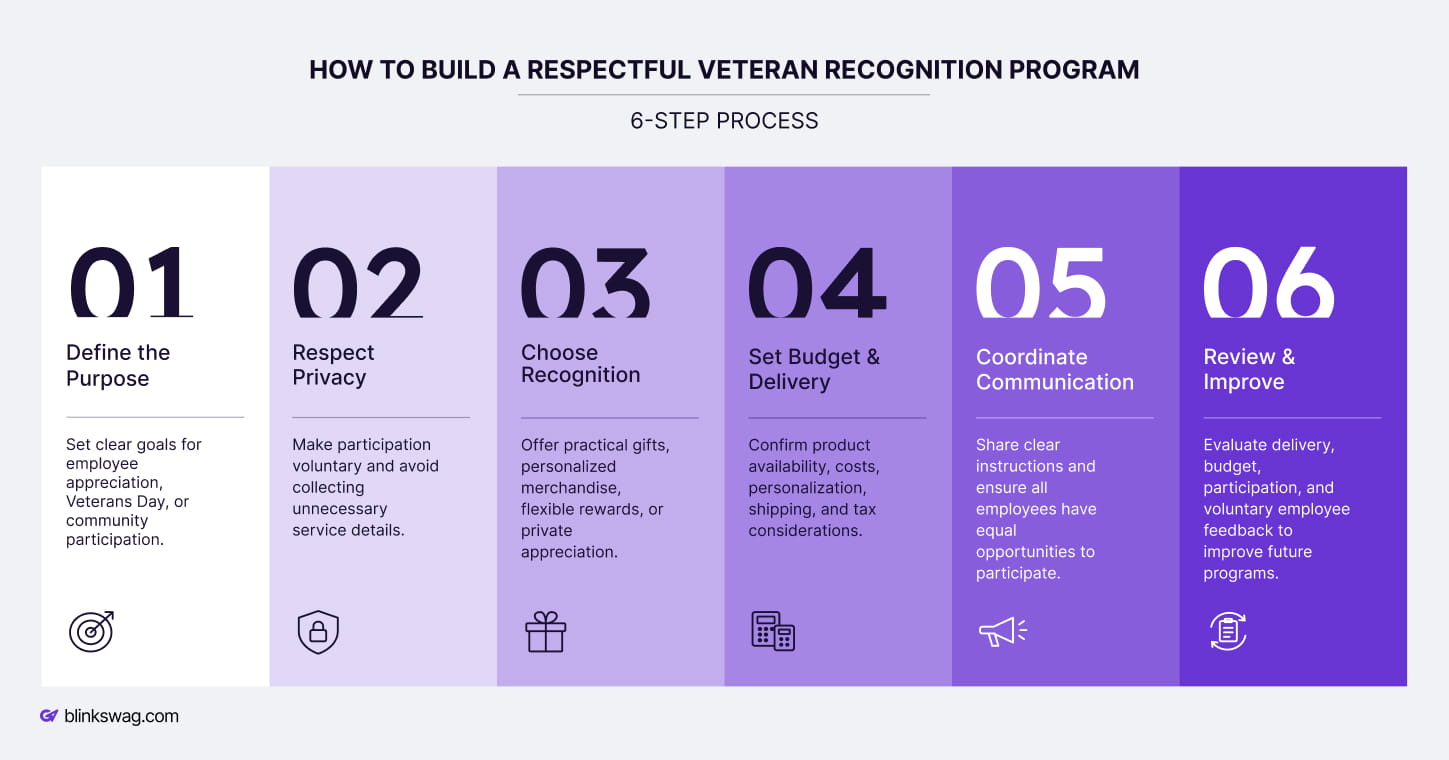
Step 1: Define the Recognition Objective
Decide whether the initiative will focus on employee appreciation, a general Veterans Day observance, community participation, or a combination of these activities.
A clearly defined purpose helps determine the appropriate audience, communication approach, and recognition format.
Step 2: Establish Voluntary Participation and Privacy Controls
Explain how employees can participate, what information is needed, and whether recognition will be public or private.
Avoid collecting unnecessary service details.
Any employee information used in the program should be handled in accordance with applicable organizational policies and legal requirements.
Step 3: Identify Suitable Recognition Options
Evaluate whether employees would prefer practical merchandise, personalized gifts, flexible rewards, private acknowledgment, or voluntary activities.
When individual preferences are unknown, offer appropriate alternatives rather than assuming a single gift will work for everyone.
Step 4: Confirm Budget, Products, and Delivery Requirements
Establish spending limits, verify product availability, and confirm personalization and fulfillment requirements.
Consider the additional costs associated with packaging, shipping, and program administration.
Employers should also review tax considerations before finalizing rewards.
Step 5: Coordinate Employee Communication and Fulfillment
Provide clear participation instructions and realistic delivery expectations.
Ensure that remote employees, operational teams, and workers assigned to different shifts have appropriate opportunities to participate.
Managers should understand which information may be communicated publicly and which details must remain private.
Step 6: Evaluate the Program and Improve Future Recognition
Review whether the intended recognition opportunities were accessible and appropriately delivered.
Useful operational measures may include gift-selection completion, delivery performance, budget adherence, and the number of fulfillment issues requiring resolution.
Voluntary employee feedback can help identify what worked and what should change.
However, employers should not interpret declining participation as evidence of dissatisfaction.
The program’s purpose is to create a respectful opportunity for appreciation, not to require measurable enthusiasm from employees.
How Can BlinkSwag Help Employers Plan Meaningful Veterans Day Gifts?
BlinkSwag helps organizations coordinate employee gifting programs through curated merchandise, recipient-choice options, budget controls, and fulfillment services.
For HR teams planning Veterans Day appreciation across multiple departments or locations, these capabilities can support different gift preferences while reducing manual coordination.
Through BlinkSwag Employee Gifting, employers can explore approved gift collections, set program budgets, allow employees to select suitable options, and coordinate delivery to supported destinations.
Organizations can also browse the BlinkSwag Corporate Gift Catalog for drinkware, notebooks, apparel, accessories, curated gift packages, and other employee appreciation products.
Program details, personalization options, product availability, and delivery timelines should be confirmed before purchasing.
Frequently Asked Questions About Veterans Day Employee Recognition
What Are Appropriate Veterans Day Gifts for Employees?
Appropriate Veterans Day gifts include practical merchandise, personalized accessories, premium drinkware, professional notebooks, curated appreciation packages, and flexible rewards. Employers should consider individual preferences, everyday usefulness, and whether the recipient wants a military-themed item.
Should Employers Publicly Recognize Veteran Employees?
Public recognition should occur only when employees are comfortable participating and have provided appropriate permission. Employers should not automatically disclose military backgrounds, personal experiences, or photographs. Private messages and optional gifts provide suitable alternatives.
Are Military-Themed Gifts Appropriate for Every Veteran?
No. Some veterans appreciate commemorative merchandise, patriotic designs, or service-related keepsakes, while others prefer gifts unrelated to military service. Employers should consider preferences rather than assume that military-themed products suit every recipient.
How Can Employers Recognize Veterans Who Work Remotely?
Remote employees can participate by sending personal appreciation messages, participating in voluntary virtual activities, choosing recipient-selected rewards, or receiving physical gifts delivered to appropriate addresses. Employers should consider employee privacy, delivery timelines, and access to recognition opportunities.
Can Companies Honor Veterans Without Giving Physical Gifts?
Yes. Employers can express appreciation through sincere messages, voluntary workplace activities, community initiatives, and appropriate year-round support. Physical gifts are optional expressions of gratitude rather than requirements for meaningful recognition.
How Much Should Employers Spend on Veterans Day Gifts?
There is no universal amount that guarantees meaningful appreciation. Employers should establish a budget based on the program’s scope, the selected gifts, personalization, delivery costs, and organizational policies. Recipient relevance and thoughtful presentation matter more than selecting an arbitrary spending threshold.
Can Employers Give Veterans Day Gift Cards to Employees?
Yes, employers may offer gift cards as part of an appreciation program, subject to applicable policies and requirements. However, ordinary gift cards and other cash-equivalent rewards generally cannot qualify for the IRS de minimis fringe benefit exclusion. Employers should review tax reporting requirements before distributing them.
What If an Employee Does Not Want to Participate in Veterans Day Recognition?
Employers should respect employees’ decisions without requiring an explanation. Participation in public recognition, workplace events, and appreciation gifting should be voluntary. An employee’s decision to decline recognition should not affect their treatment in the workplace.
Meaningful Veteran Recognition Begins With Respect
Veterans Day allows employers to acknowledge military service, but meaningful recognition depends on how that appreciation is expressed.
A thoughtfully selected gift may be valuable to one employee, while another may prefer a private message, a voluntary activity, or no individual recognition. The appropriate approach reflects the person’s preferences rather than an assumption about what military service should mean to them.
For organizations managing recognition across multiple locations, effective planning can make appreciation more accessible while protecting employee privacy, maintaining consistent program rules, and ensuring gifts are delivered appropriately.
The most important measure of a Veterans Day initiative is not how many products are distributed or how visible the celebration becomes. It is whether the organization has created a respectful opportunity for employees to feel acknowledged on their own terms.
Respect the individual, recognize the service, and choose gifts that reinforce genuine appreciation.