Walk through any busy trade show floor, and you will notice a familiar pattern. Many booths display stacks of generic giveaways, a branded tablecloth, and a bowl for business cards. Attendees glance at the merchandise, maybe grab a pen, and continue walking.
Interactive swag booths change that dynamic entirely.
Instead of simply distributing merchandise, these booths invite attendees to participate in an experience. They can design their own hat, watch a T-shirt printed live, spin a prize wheel, or build a personalized swag kit. Participation transforms a passive giveaway into a memorable interaction.
The difference is measurable. Industry event benchmarks consistently show that booths offering giveaways attract significantly more visitors, and interactive activations often generate longer dwell times and stronger brand recall compared with passive displays.
This guide explores 18 creative interactive swag booth ideas for events, along with the strategy, infrastructure, and planning required to execute them successfully. Whether you are preparing for a trade show, corporate conference, campus activation, or product launch, these ideas will help turn event merchandise into a meaningful engagement tool.
Who This Guide Is For
This guide is designed for teams responsible for event engagement and brand activations, including:
- trade show marketing teams
- event planners and conference organizers
- experiential marketing agencies
- HR and employer branding teams
- university event coordinators
If your goal is to increase booth traffic, capture more qualified leads, and create memorable brand experiences through customized merchandise, the strategies below will help you design an interactive swag booth that performs.
Why Interactive Swag Booths Attract More Event Attendees

The difference between a booth people visit, and a booth people remember often comes down to behavioral psychology. Interactive swag activations trigger several engagement drivers simultaneously.
Reciprocity
When someone receives a useful or personalized item, they often feel naturally inclined to reciprocate. In event environments, that reciprocity frequently takes the form of conversation, badge scanning, or scheduling a follow-up meeting.
The Endowment Effect
Items that attendees help create feel more valuable than items simply handed to them. Watching a shirt printed or choosing a patch for a hat gives the recipient a sense of ownership before they even leave the booth.
Gamification
Games trigger anticipation and excitement. Prize wheels, scavenger hunts, and claw machines encourage repeat engagement and extend dwell time.
Social Proof
Crowded booths attract more visitors. When attendees see others customizing merchandise or playing games, curiosity draws them in.
Social Sharing
Personalized items frequently become shareable moments. Attendees photograph custom hats, sneakers, or AI-generated images and post them on social platforms, extending the event’s reach far beyond the booth itself.
Swag is not simply a giveaway. It is the experience your attendees take home.
The ROI Case for Interactive Swag Booths
Interactive activations are not just creative. They are strategically effective.
Industry event research and promotional product studies commonly highlight several trends:
- A majority of event attendees report being more likely to visit booths offering giveaways.
- Promotional merchandise consistently ranks among the most memorable forms of brand exposure.
- Personalized items generate higher perceived value and longer retention compared with generic giveaways.
Interactive experiences amplify those effects by increasing dwell time and engagement. When attendees spend several minutes designing an item or participating in a game, brand interactions become conversations rather than quick exchanges.
For many companies, trade shows remain one of the most efficient channels for generating qualified leads. A well-designed swag activation can strengthen that performance by encouraging visitors to interact with booth staff before receiving their item.
Choose the Right Interactive Swag Booth for Your Event Type
Not every activation works for every event. The most effective interactive swag booths align with the event’s purpose.
Trade Show Lead Generation
Recommended activations:
- live printing stations
- spin-to-win prize wheels
- tiered swag rewards
Lead-capture methods typically include badge scanning or QR code scanning before personalization begins.
Employer Branding Events
Recommended activations:
- custom hat or patch bars
- photo booths with branded apparel
- build-your-own swag kits
These experiences encourage social sharing and reinforce company culture.
Campus Activations
Recommended activations:
- branded claw machines
- charm collection trails
- sticker design studios
These formats work particularly well for high-energy environments with younger audiences.
Product Launch Events
Recommended activations:
- augmented reality try-on stations
- premium customization experiences
- scheduled prize drops or giveaways
Product launches benefit from visually striking experiences that reinforce the brand story.
The Three-Zone Interactive Booth Layout
Successful interactive booths often follow a simple yet effective layout.
Attraction Zone
The booth’s outer edge draws attention. Visual activations such as prize wheels, claw machines, or live printing displays signal activity and attract passersby.
Engagement Zone
This central area hosts the primary activity, such as merchandise customization or gameplay. Attendees spend the most time here.
Conversion Zone
Near the booth exit, staff capture leads, schedule follow-up meetings, or unlock higher-tier swag rewards.
Separating these zones improves flow and prevents congestion during busy periods.
18 Creative Interactive Swag Booth Ideas for Events
The following ideas are grouped by engagement style. Each includes operational considerations, allowing teams to evaluate feasibility and creativity.
Live Personalization Experiences

1. Live T-Shirt Printing Booth
Best for
Trade shows, brand activations, and large conferences.
What attendees do
Choose a design and size, then watch your shirt being printed on-site.
What you give
A custom event T-shirt was produced during the interaction.
Lead capture
Badge scan or quick registration before printing begins.
Setup needs
Heat press, pre-printed transfer designs, and sizing inventory.
Throughput
Approximately 50-60 shirts per hour per station, depending on the print cycle.
Cost tier
Medium.
Live printing turns production into entertainment. The process itself draws attention and encourages people to stay nearby while their items are being prepared.
2. Custom Hat Bar
Best for
Corporate conferences, employer branding events, and retail brand activations.
What attendees do
Select a hat color, then choose embroidered patches or text.
What you give
A personalized cap customized on-site.
Lead capture
Digital customization form with attendee name and email.
Setup needs
Blank hats, patch inventory, heat press, or embroidery machine.
Throughput
30 to 40 hats per hour, depending on the decoration method.
Cost tier
Medium.
Hat bars consistently generate strong engagement because the variety of options encourages creative decision-making.
3. Engraved Drinkware Station
Best for
Professional conferences and B2B trade shows.
What attendees do
Select a tumbler or water bottle and engrave their name or initials.
What you give
A customized piece of drinkware.
Lead capture
Short form completed before engraving.
Setup needs
Portable laser engraver and stainless steel drinkware.
Throughput
40 to 50 items per hour.
Cost tier
Medium.
Drinkware is one of the most frequently used promotional products, which means the brand exposure continues long after the event.
4. SwagBot 3D Printing Station
Best for
Technology conferences, startup events, and innovation showcases.
What attendees do
Customize a small item such as a keychain or badge holder.
What you give
A personalized 3D-printed item.
Lead capture
A QR code order system that records attendee details.
Setup needs
Desktop 3D printers, filament materials, and digital design templates.
Throughput
Slower than other activities. Often paired with a waiting list system.
Cost tier
Medium to high.
The visual appeal of watching objects form layer by layer attracts significant attention.
Gamified Swag Experiences
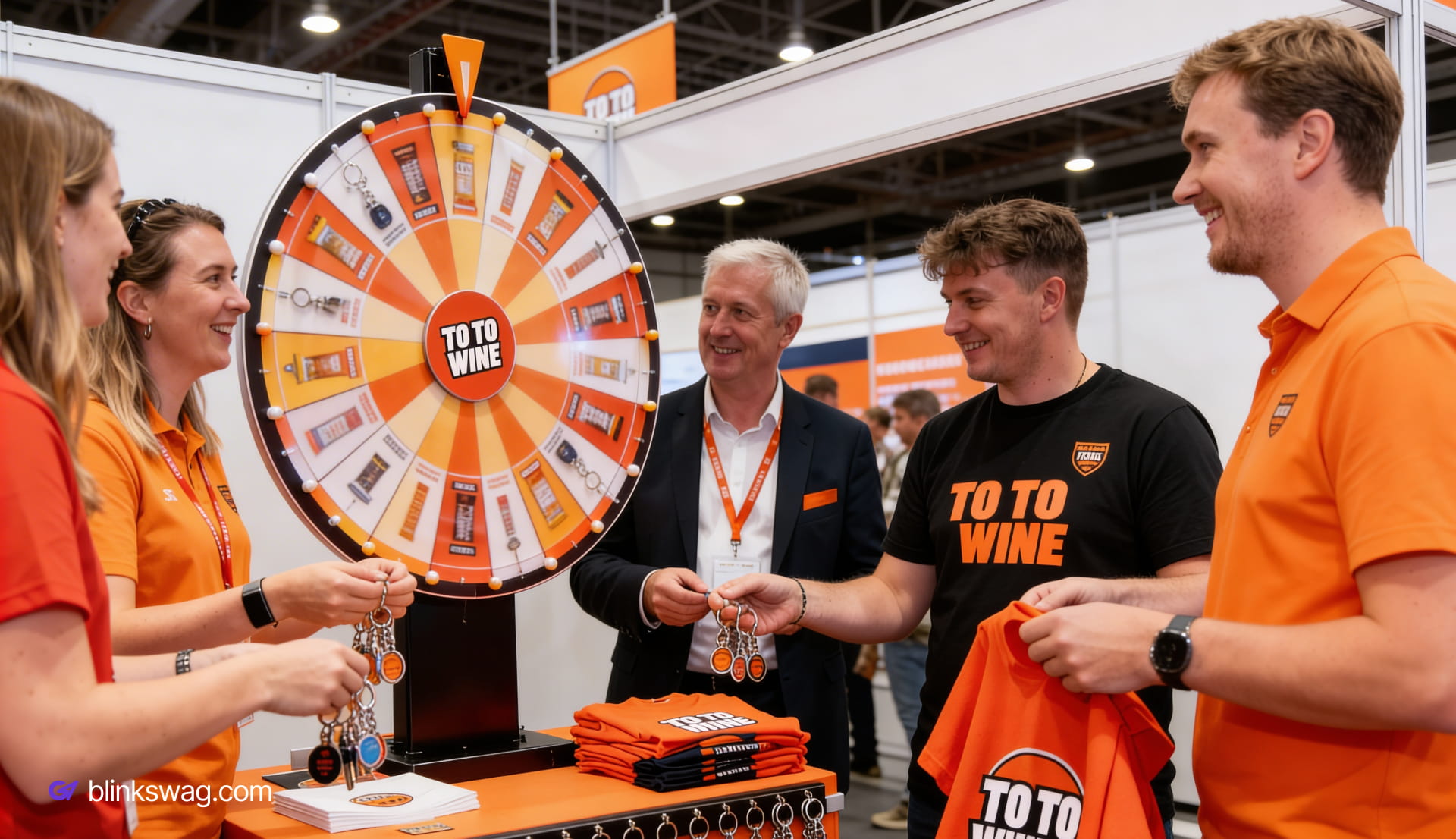
5. Spin-to-Win Prize Wheel
Best for
Trade shows and high-traffic conference booths.
What attendees do
Spin a branded prize wheel.
What you give
Items ranging from stickers to premium swag kits.
Lead capture
Badge scan required before spinning.
Setup needs
Prize wheel and tiered merchandise inventory.
Throughput
Extremely high. Hundreds of participants per hour.
Cost tier
Low to medium, depending on prize structure.
Prize wheels are simple but extremely effective for generating excitement.
6. Branded Claw Machine
Best for
Consumer brand activations and experiential marketing events.
What attendees do
Try to grab a prize from a claw machine filled with branded merchandise.
What you give
Small swag items such as tech accessories or pouches.
Lead capture
Scan to play.
Setup needs
Claw machine rental and prize inventory.
Throughput
High.
Cost tier
Medium.
The nostalgia factor makes this activation highly photogenic and shareable.
7. QR Code Scavenger Hunt
Best for
Large conferences or multi-area events.
What attendees do
Scan QR codes placed throughout the booth or event space.
What you give
A reward item once all codes are collected.
Lead capture
Each scan records engagement data.
Setup needs
QR code signage and digital tracking platform.
Throughput
Very high.
Cost tier
Low.
This activation encourages attendees to explore the event environment while repeatedly interacting with your brand.
8. Mystery Swag Vending Machine
Best for
Trade shows with heavy foot traffic.
What attendees do
Enter contact information to receive a vending code.
What you give
A mystery swag package.
Lead capture
Digital form tied to vending machine access.
Setup needs
Customized vending machine and packaged prizes.
Throughput
High.
Cost tier
Medium.
The element of surprise makes this activation highly engaging.
Social Media–Driven Experiences

9. AI Photo Booth with Branded Merch
Best for
Brand activations, conferences, and employer branding events.
What attendees do
Take photos using an AI-powered booth that places them into branded scenes or themed environments.
What you give
Digital photos and optional printed merchandise such as photo cards or stickers.
Lead capture
Photos are delivered via email or SMS, naturally collecting attendee contact information.
Setup needs
AI photo booth software, camera setup, lighting, and branded backgrounds.
Throughput
60–80 participants per hour, depending on photo processing speed.
Cost tier
Medium.
AI photo booths have become a popular experiential tool because attendees often share their images on social media. Each share carries brand exposure beyond the event itself.
10. Sneaker Customization Wall
Best for
Product launches, creative industry events, and youth-focused activations.
What attendees do
Customize blank canvas sneakers using paints, markers, patches, and laces.
What you give
A personalized pair of sneakers.
Lead capture
Registration is required before customization begins.
Setup needs
Sneakers in multiple sizes, Art supplies, and protective work surfaces.
Throughput
Lower throughput due to time invested in creativity.
Cost tier
High.
Because the finished product is unique, attendees often photograph and share their designs, increasing brand reach.
11. Collectible Charm Lanyard Trail
Best for
Large conferences and multi-day events.
What attendees do
Receive a lanyard and collect charms by interacting with different booth representatives.
What you give
A premium swag item once the charm set is completed.
Lead capture
Each charm station requires an interaction or badge scan.
Setup needs
Lanyards, collectible charms, and tracking cards.
Throughput
Very high.
Cost tier
Low to medium.
This system encourages repeat visits and multiple conversations with booth staff.
Build-Your-Own Experiences

12. Build-Your-Own Swag Kit
Best for
Corporate conferences and partner events.
What attendees do
Select items from a curated wall of merchandise.
What you give
A personalized swag bundle assembled by the attendee.
Lead capture
Badge scan before kit selection.
Setup needs
Display shelving and diverse merchandise inventory.
Throughput
Medium to high, depending on station size.
Cost tier
Medium.
The act of choosing items creates a stronger emotional attachment to the swag.
13. Patch Bar
Best for
Casual brand activations and lifestyle brands.
What attendees do
Select patches and apply them to hats, bags, or jackets.
What you give
Customized apparel or accessories.
Lead capture
Quick registration form or badge scan.
Setup needs
Patch inventory and heat press equipment.
Throughput
40–50 items per hour.
Cost tier
Low to medium.
Patch bars are flexible activations that work well as overflow stations during busy event periods.
14. Custom Sticker Studio
Best for
Tech conferences and creative communities.
What attendees do
Design their own sticker sheet using a digital kiosk.
What you give
Printed custom stickers.
Lead capture
Design submission requires an email entry.
Setup needs
Design a kiosk and an on-site sticker printer.
Throughput
Very high.
Cost tier
Low.
Sticker studios are inexpensive yet extremely engaging because participants enjoy creating personal designs.
15. Custom Tote Bag Decorating Station
Best for
Sustainability-themed events and lifestyle brands.
What attendees do
Decorate blank tote bags using stamps, fabric markers, or patches.
What you give
A one-of-a-kind tote bag.
Lead capture
Registration before entering the decorating station.
Setup needs
Art materials and blank tote inventory.
Throughput
Moderate.
Cost tier
Low to medium.
Tote decorating encourages longer engagement time and creative participation.
Bonus High-Impact Experiences

16. Augmented Reality Try-On Station
Best for
Fashion brands and tech-focused events.
What attendees do
Virtually try on branded apparel using AR displays.
What you give
The selected apparel item is produced on-site or shipped later.
Lead capture
Digital profile created during virtual fitting.
Setup needs
AR software and tablet or screen displays.
Throughput
Medium.
Cost tier
Medium to high.
AR try-on bridges the digital and physical experience, especially useful for apparel brands.
17. Gamified Prize Draw with Badge Integration
Best for
Large conference environments.
What attendees do
Scan badges to enter scheduled prize draws.
What you give
High-value swag or swag kits.
Lead capture
Automatic through badge scanning.
Setup needs
Digital drawing system and event display screens.
Throughput
Very high.
Cost tier
Medium.
Scheduled drawings create periodic surges of booth traffic.
18. Personalized Swag Reminder Station
Best for
Large events with extended sales cycles.
What attendees do
Receive a digital preview of their customized item.
What you give
A follow-up email featuring the item they designed.
Lead capture
Automatic through the digital design system.
Setup needs
Customization kiosk and CRM integration.
Throughput
High.
Cost tier
Low.
This approach strengthens post-event follow-up by reconnecting attendees with their personalized merchandise.
Tiered Swag Strategy: Aisle, Counter, and VIP
Not every attendee should receive the same level of merchandise. A tiered swag structure helps balance engagement with budget control.
Aisle Tier
Freely distributed items designed to attract attention.
Examples:
- stickers
- patches
- pins
- lanyards
Goal: generate booth traffic.
Counter Tier
Customized items reserved for engaged attendees.
Examples:
- hats
- T-shirts
- tote bags
- engraved drinkware
Goal: capture contact information and extend conversation time.
VIP Tier
Premium items reserved for high-intent prospects.
Examples:
- curated swag kits
- premium tech accessories
- branded apparel bundles
Goal: reward meaningful interactions and encourage meeting bookings.
This structure protects the budget while using premium items as a conversion unlock.
Technology That Powers Interactive Swag Booths
Several tools enable modern interactive swag experiences.
Heat Press Machines
Ideal for apparel customization, such as T-shirts and tote bags. These machines typically complete prints in under a minute.
Embroidery Stations
Often used for hats and premium apparel. Embroidery provides a high-end finish and strong perceived value.
Laser Engravers
Used for drinkware, leather goods, and metal accessories.
Touchscreen Customization Kiosks
Allow attendees to design merchandise digitally before production begins.
RFID Badge Scanning
Simplifies lead capture without requiring manual form entry.
QR Code Tracking
QR codes linked with tracking parameters connect booth interactions to digital analytics.
Throughput Planning: Quick Rule of Thumb
Operational planning is critical to the success of interactive booths.
A simple guideline:
- If one station serves a participant in about 60 seconds, it can process roughly 50–60 people per hour.
For example:
If you expect 300 redemptions during a three-hour peak window, you should operate two to three stations simultaneously to prevent long wait times.
This type of planning helps maintain booth momentum and keeps attendees engaged.
How Interactive Swag Booths Generate Leads
Swag activations become significantly more powerful when integrated into a structured lead funnel.
Attraction
Visual activations, such as printing stations or games, draw visitors.
Engagement
Customization experiences increase dwell time and conversation opportunities.
Capture
Badge scans, QR forms, or kiosks collect attendee contact information.
Qualification
Tiered swag rewards identify higher-intent prospects.
Follow-Up
Post-event emails referencing the attendee’s personalized swag item help reconnect with the lead.
Companies that follow up promptly after events often see stronger conversion rates.
Sustainable Interactive Swag Booths
Sustainability has become a growing priority in event marketing.
Interactive swag booths can support environmentally responsible practices through several approaches.
Recycled Materials
Using products made from recycled fabrics, plastics, or metals.
Reusable Merchandise
Choosing items attendees will use repeatedly rather than disposable giveaways.
Low-Waste Packaging
Reducing single-use packaging during on-site distribution.
Post-Event Donations
Unused swag can be donated to nonprofit organizations or community groups.
Ship-Later Options
Attendees design items on-site but receive them later via shipment, reducing the need for large on-site inventory.
Hybrid Event Swag Activations
Hybrid events combine in-person and virtual audiences. Swag experiences can support both.
Example hybrid workflow:
- In-person attendees customize items at the booth.
- Virtual participants customize items through an online portal.
- Orders are fulfilled and shipped after the event.
- QR codes and tracking links connect both audiences to the same campaign analytics.
This approach allows remote attendees to participate in the experience while maintaining consistent branding.
How BlinkSwag Helps Brands Execute Interactive Swag Experiences
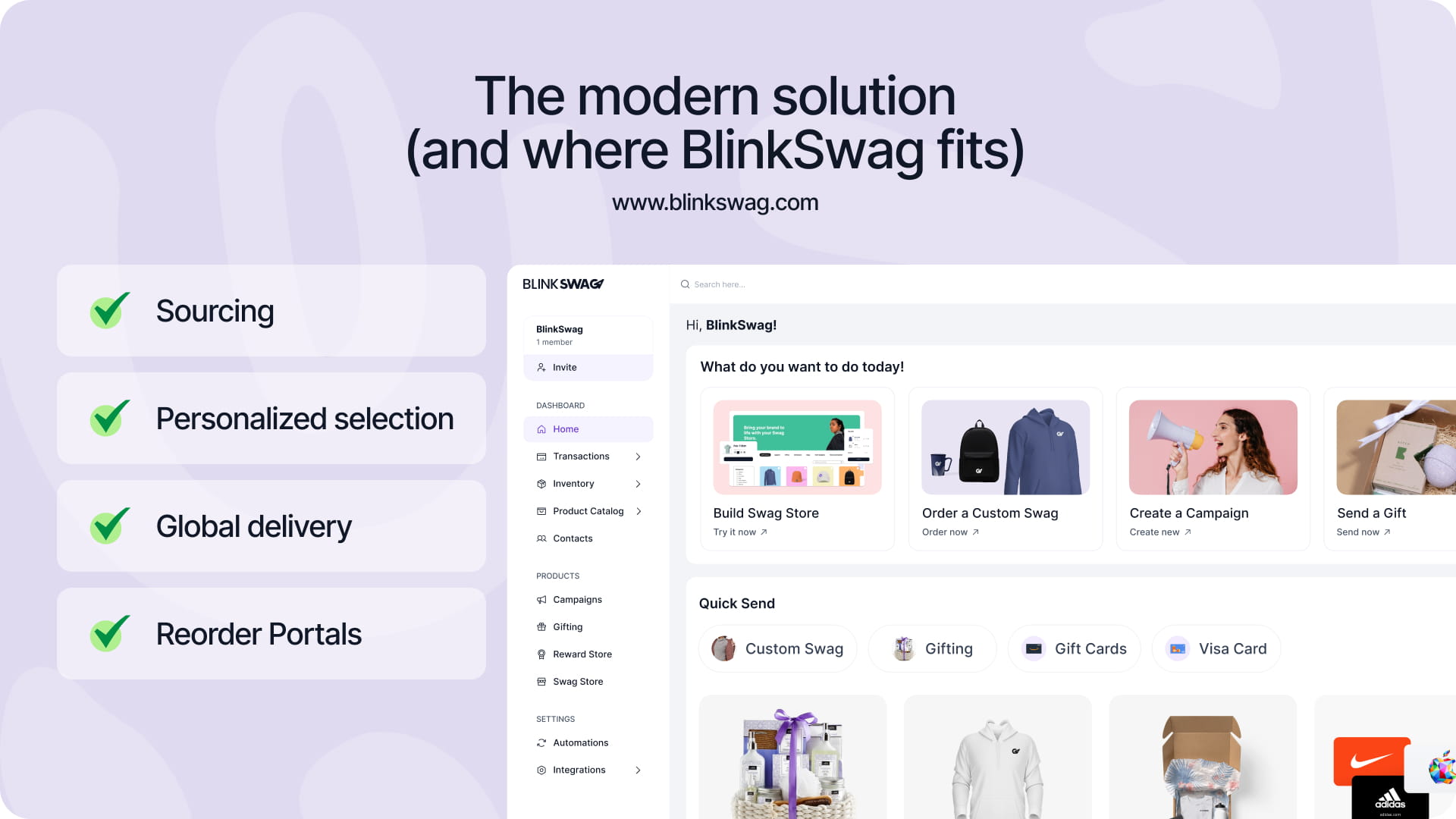
Executing a successful interactive swag booth requires careful planning and logistics. BlinkSwag helps brands manage the entire process.
Merchandise Sourcing
BlinkSwag provides a wide range of customizable promotional products suitable for event activations.
Decoration Methods
Options include screen printing, embroidery, engraving, and heat transfer decoration.
Kitting and Packaging
Swag kits can be assembled in advance for tiered distribution strategies.
Event Drops
Inventory can be shipped directly to event venues with clear distribution planning.
Post-Event Fulfillment
Unredeemed or personalized items can be shipped to attendees after the event.
Reorder Portals
Brands can easily reorder merchandise for future events or ongoing campaigns.
Planning Checklist for an Interactive Swag Booth
Use the following checklist to prepare for a successful activation.
- Confirm booth size and electrical requirements
- Forecast merchandise inventory with an extra buffer
- Test badge scanners and QR code forms before the event
- Train booth staff on customization workflow
- Create clear booth zones for attraction, engagement, and conversion
- Define VIP swag unlock criteria
- Schedule regular booth reset breaks to restock merchandise
- Prepare post-event follow-up emails in advance
- Monitor social media mentions during the event
- Track engagement metrics to improve future activations
Common Interactive Swag Booth Mistakes
Generic Merchandise
Items with little utility or personalization rarely leave a lasting impression.
Long Wait Times
Crowded lines can discourage participation if not managed properly.
Weak Lead Capture
Failing to capture attendee information before the experience reduces marketing impact.
Poor Booth Flow
A lack of defined zones can lead to congestion and confusion.
No Post-Event Follow-Up
Without timely follow-up communication, event interactions often fade quickly.
The Future of Event Swag Is Experiential
Event marketing has evolved from simple displays to immersive brand experiences. Attendees remember booths where they participated, customized something meaningful, and interacted with people behind the brand.
Interactive swag booths combine experiential marketing with tangible brand recall. When designed thoughtfully, they attract more visitors, extend dwell time, and convert casual interactions into qualified leads.
The key is not simply choosing creative ideas. It is building an activation strategy that connects engagement, personalization, and follow-up into one cohesive experience.
Frequently Asked Questions
What is an interactive swag booth?
An interactive swag booth is an event activation where attendees participate in an activity or customization experience before receiving branded merchandise.
How do swag giveaways increase booth traffic?
Giveaways attract visitors because they provide immediate value. Interactive swag experiences strengthen this effect by encouraging participation, which increases dwell time and conversation opportunities.
How much does interactive swag increase trade show lead conversion?
Interactive activations can increase engagement and dwell time compared with passive displays. Higher engagement often leads to improved lead capture and stronger post-event follow-up opportunities.
What is a tiered swag strategy?
A tiered swag strategy divides merchandise into three levels: aisle, counter, and VIP. This structure aligns item value with prospect engagement level and helps manage marketing budgets.
What swag works best at events?
Items that combine utility and personalization perform best. Apparel, drinkware, tech accessories, and curated swag kits tend to generate strong recall when attendees help create or customize them.
Turning Swag Into an Experience That Drives Results
Event marketing has shifted from static displays to immersive experiences. Attendees no longer remember booths that simply distribute merchandise. They remember moments where they interacted, customized something personal, and walked away with an item that feels uniquely theirs.
Interactive swag booths bring together three powerful elements of modern event strategy: experiential marketing, brand storytelling, and measurable lead generation. When attendees design a hat, engrave their name on drinkware, or participate in a gamified prize draw, they are not just collecting merchandise. They are forming a memorable connection with the brand behind the experience.
If your team is preparing for an upcoming trade show, conference, or brand activation, now is the time to think beyond traditional giveaways. The ideas in this guide provide a starting point, but the real opportunity lies in building an experience that reflects your brand and creates lasting engagement with your audience.
Free Downloadable Resources for Event Teams
To help you plan your next event activation, we have created several practical planning resources. These tools expand on the strategies discussed in this guide and can help your team organize booth logistics, swag inventory, and lead capture workflows.
Interactive Swag Booth Planning Checklist
A complete operational checklist for planning and executing an interactive booth activation.
Includes:
- booth layout planning guide
- equipment and power requirements
- swag inventory forecasting worksheet
- staffing and workflow planning
- lead capture setup checklist
- event-day operations guide
Download the Interactive Swag Booth Planning Checklist
Event Swag Tier Strategy Blueprint
A framework for implementing the Aisle–Counter–VIP swag strategy discussed in this guide.
Includes:
- tiered merchandise planning templates
- lead qualification examples
- swag budget allocation model
- recommended item categories per tier
- sample activation layouts
Download the Event Swag Tier Strategy Blueprint
Interactive Booth Activation Planner
A step-by-step planning workbook for designing an experiential swag booth.
Includes:
- activation concept development worksheet
- booth traffic forecasting model
- throughput planning calculator
- queue management guidelines
- engagement measurement metrics
Download the Interactive Booth Activation Planner
Need Help Designing an Interactive Swag Experience?
If you are planning an event and want help building an interactive swag activation, the BlinkSwag team can help you design a complete merchandise strategy.
BlinkSwag supports brands with:
- custom event merchandise sourcing
- on-site personalization options
- swag kit creation and packaging
- event inventory planning
- post-event swag fulfillment
Whether you are preparing for a trade show, conference, campus event, or product launch, the right swag experience can help your booth stand out and create meaningful connections with attendees.
Request a Custom Swag Strategy Consultation with BlinkSwag