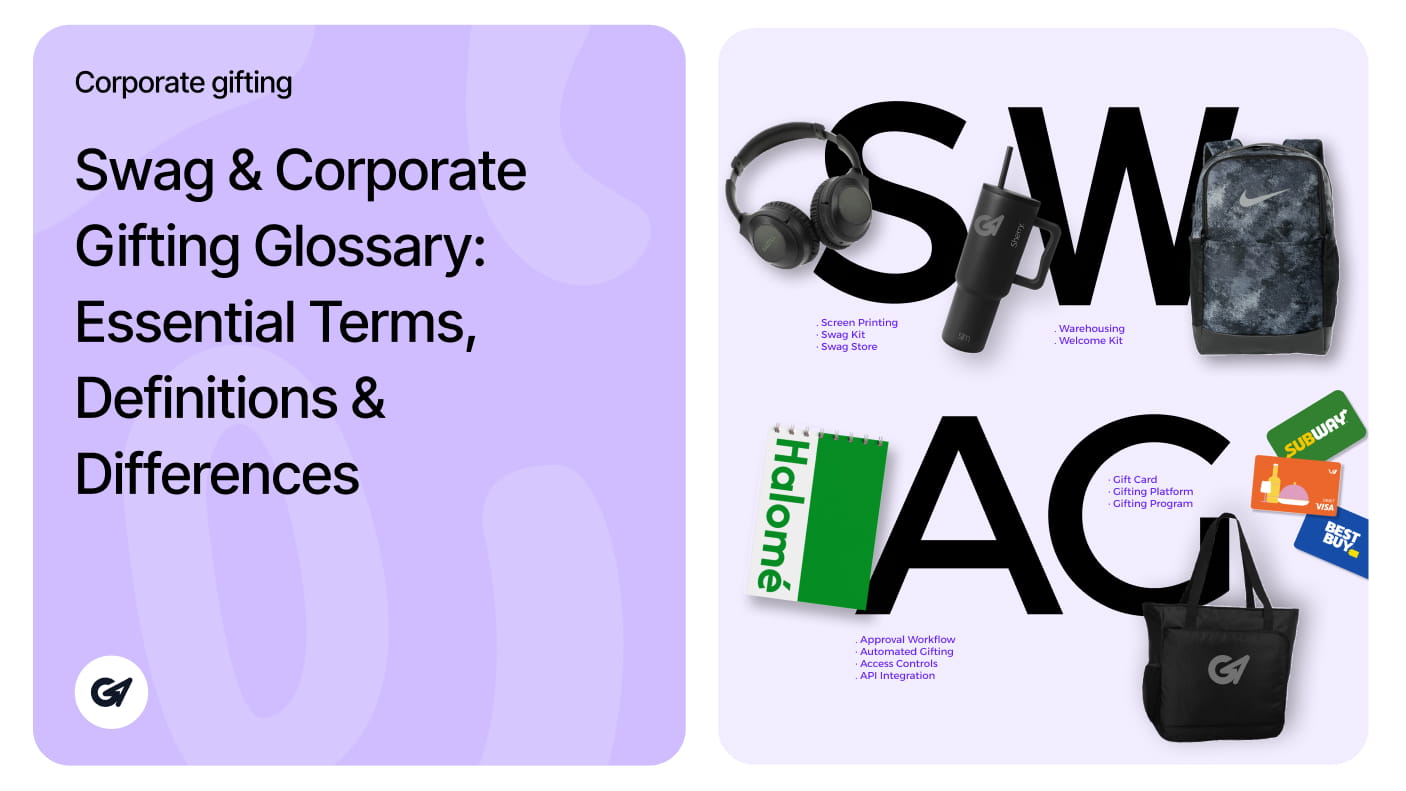
Swag and corporate gifting come with a vocabulary of their own. Terms such as promotional products, branded merchandise, corporate gifts, employee recognition, rewards, recipient choice, kitting, fulfillment, MOQ, swag store, and Reward Link often refer to related concepts. Still, they do not always mean the same thing.
This glossary explains the essential language businesses use to plan, buy, brand, govern, distribute, and measure swag and corporate gifting programs. It also explains where similar concepts separate, why those boundaries matter, and how those differences can affect practical decisions involving budgets, recipients, branding, compliance, inventory, technology, and fulfillment.
What Does “Swag” Mean in Business?
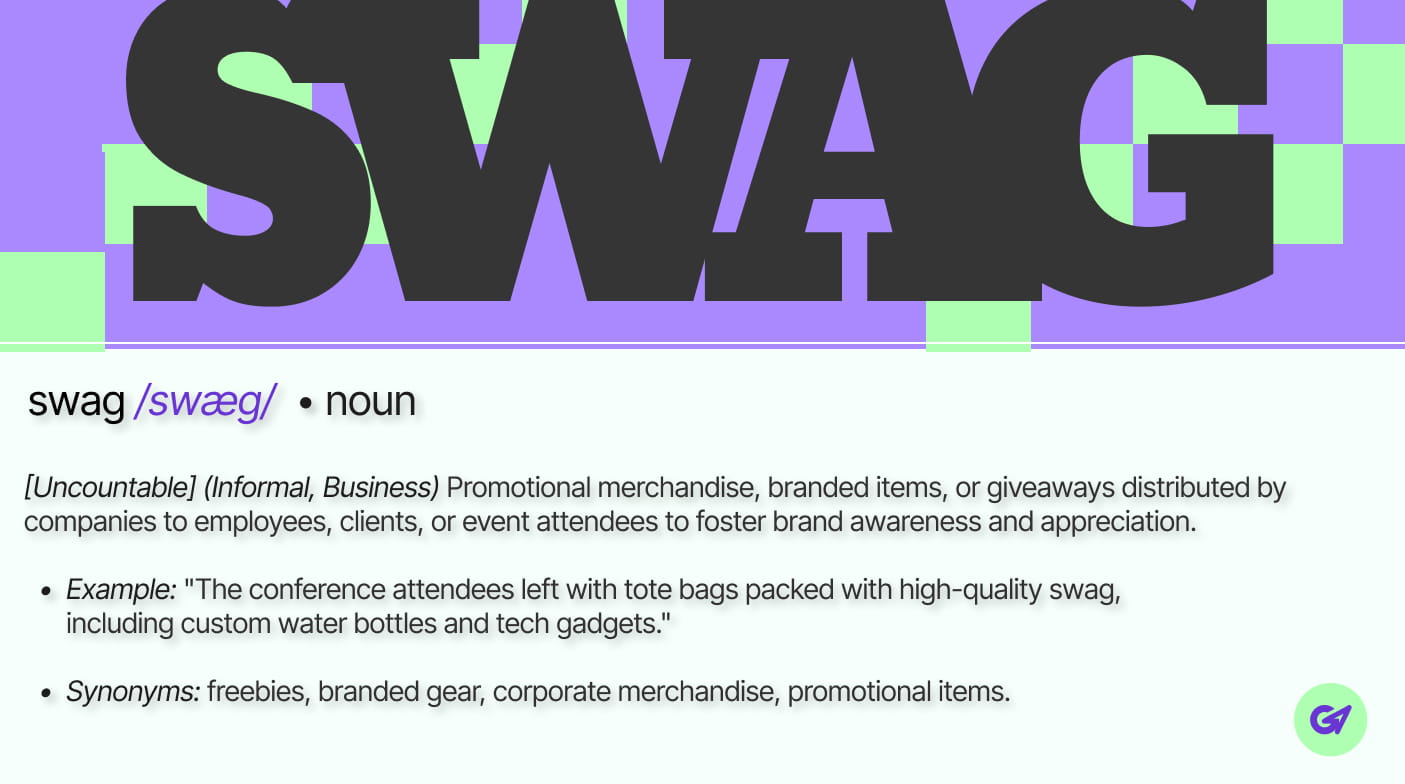
In business, swag commonly refers to branded or promotional merchandise distributed to employees, customers, prospects, partners, event attendees, or other communities.
Depending on the context, swag can mean a single branded item, an employee welcome kit, conference merchandise, customer gifts, or a larger company merchandise program.
Merriam-Webster recognizes modern uses of swag for promotional goods and items distributed to participants. The word itself has much older recorded meanings, so the popular expression “Stuff We All Get” should not be presented as the word’s historical origin.
Swag overlaps with promotional products and branded merchandise, but those terms are not universally interchangeable. A corporate gift can also be completely unbranded and still be part of a corporate gifting program.
That distinction is where this glossary begins.
How to Use This Glossary
If you are looking up one term, use the A–Z index.
If two terms sound similar, start with Commonly Confused Swag & Corporate Gifting Terms.
If you want to understand how the wider system fits together, browse by category. Each primary definition explains the nearest related concept, why the difference matters, and where to find a deeper BlinkSwag resource.
Commonly Confused Swag & Corporate Gifting Terms
Many buying and programming mistakes begin with two people using the same language differently.
| Terms | Core distinction | Why the distinction matters |
| Swag vs. promotional products | Swag is informal business language for branded or promotional merchandise. Promotional products are an established industry category of merchandise that carry a logo or message and are used for promotional purposes. | Marketers, employees, suppliers, and procurement teams may use different terminology for overlapping products. |
| Swag vs. corporate gifts | Swag usually emphasizes branded merchandise. Corporate gifts emphasize the recipient, relationship, or occasion and do not have to carry a visible logo. | The difference can affect branding intensity, personalization, product quality, budget, packaging, and presentation. |
| Branded merchandise vs. promotional products | The categories overlap. Branded merchandise can describe a broader merchandise ecosystem, while promotional products generally have an explicit promotional purpose. | A company may need to manage merchandise as an ongoing program rather than as isolated promotional campaigns. |
| Corporate gifting vs. employee gifting | Corporate gifting is the broader business-gifting category. Employee gifting focuses specifically on employees. | Recipient type can change policy, tax treatment, messaging, privacy, budget, and fulfillment. |
| Employee recognition vs. employee reward | Recognition communicates what was valued and why. A reward provides tangible, financial, symbolic, or experiential value. | A reward does not automatically provide meaningful recognition. |
| Employee appreciation vs. employee recognition | Appreciation can express broad gratitude for a person or an ongoing contribution. Recognition usually identifies a specific contribution, behavior, achievement, or milestone. | The distinction affects message specificity, timing, frequency, and the need for a reward. |
| Gift vs. reward | A gift is commonly relationship- or occasion-led. A reward is normally tied to a defined action, achievement, condition, or program rule. | Rewards often require clearer controls on eligibility, measurement, approval, and fairness. |
| Gifting program vs. recognition program | A gifting program governs how gifts are selected and delivered. A recognition program governs how contributions and achievements are acknowledged and may or may not include gifts. | Distributing products is not, by itself, a complete recognition system. |
| Recipient vs. eligibility | A recipient is the intended receiver. Eligibility determines who qualifies to receive something. | Clear eligibility supports consistency, budget control, fairness, and automation. |
| Recipient choice vs. universal gifting | Recipient choice provides approved options. Universal gifting gives the same selection to everyone. | Choice can accommodate differences in size, diet, location, lifestyle, device ownership, and product preference. |
| Budget cap vs. gift value limit | A budget cap controls spending across a defined allocation. A gift value limit restricts the permitted value of an individual gift. | Program-level budgets and transaction-level limits solve different financial-control problems. |
| Campaign vs. gifting program | A campaign is a bounded initiative. A gifting program can operate continuously across multiple campaigns and occasions. | Duration, reporting, ownership, automation, and budget structure can differ. |
| Swag store vs. company store | The terms often overlap. A swag store usually focuses on distributing branded merchandise, while a company store may also support uniforms, workwear, internal purchasing, allowances, or external customer access. | The intended audience and business model can change inventory, pricing, permissions, and fulfillment requirements. |
| Kit vs. kitting | A kit is the finished collection of products. Kitting is the process of assembling it. | Product selection and operational assembly are separate scopes of work. |
| Fulfillment vs. shipping | Fulfillment can include receiving, storage, picking, packing, kitting, labeling, and dispatch. Shipping is the transportation stage. | Having a carrier does not provide a complete fulfillment operation. |
| MOQ vs. quantity break | MOQ is the smallest quantity a supplier will accept. A quantity break is an order threshold at which unit pricing changes. | One determines whether an order is feasible; the other affects unit economics. |
| Lead time vs. production time | Production time usually covers making or decorating the product. Lead time can encompass a broader sequence of events before an order is ready or received. | Confusing the two can result in missed event or campaign deadlines. |
| On-demand swag vs. bulk swag | On-demand models respond to an order or redemption event. Bulk swag is generally produced in larger quantities in advance. | The choice affects unit economics, inventory exposure, flexibility, storage, and waste. |
| Warehousing vs. inventory management | Warehousing is physical storage. Inventory management tracks and controls what is stored and how stock moves. | Warehouse space alone does not provide inventory visibility or control over replenishment. |
Browse the Glossary by Topic
Core Swag & Merchandise
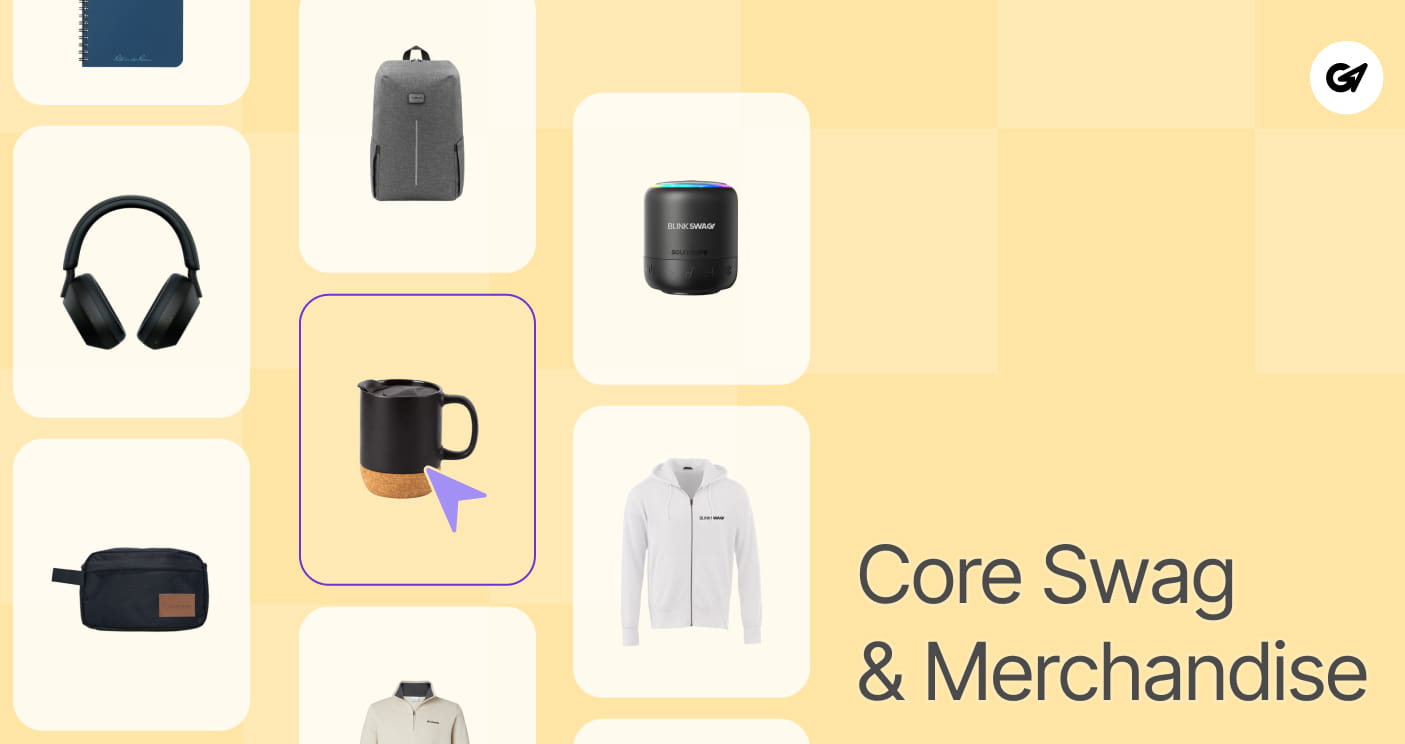
Swag · Company Swag · Employee Swag · Promotional Products · Branded Merchandise · Corporate Gift
Corporate Gifting & Recognition
Corporate Gifting · Employee Gifting · Client Gifting · Prospect Gifting · Employee Recognition · Employee Appreciation · Employee Reward · Incentive · Milestone Gift · Gift Card
Program Governance & Recipient Controls
Gifting Program · Recognition Program · Gifting Policy · Recipient · Eligibility · Recipient Choice · Approval Workflow · Budget Cap · Gift Value Limit · Campaign
Kits & Recipient Experience
Onboarding Kit · Swag Kit · Gift Box · Custom Kit · Redeem Page · Reward Link
Platforms & Program Infrastructure
Swag Store · Company Store · Gifting Platform · On-Demand Swag · Bulk Swag
Branding & Production
Decoration · Screen Printing · Embroidery
Procurement, Fulfillment & Logistics
MOQ · Lead Time · Kitting · Fulfillment · Direct-to-Recipient Shipping · Warehousing · Inventory Management
Measurement & Reporting
Redemption Rate
A–Z Quick Index
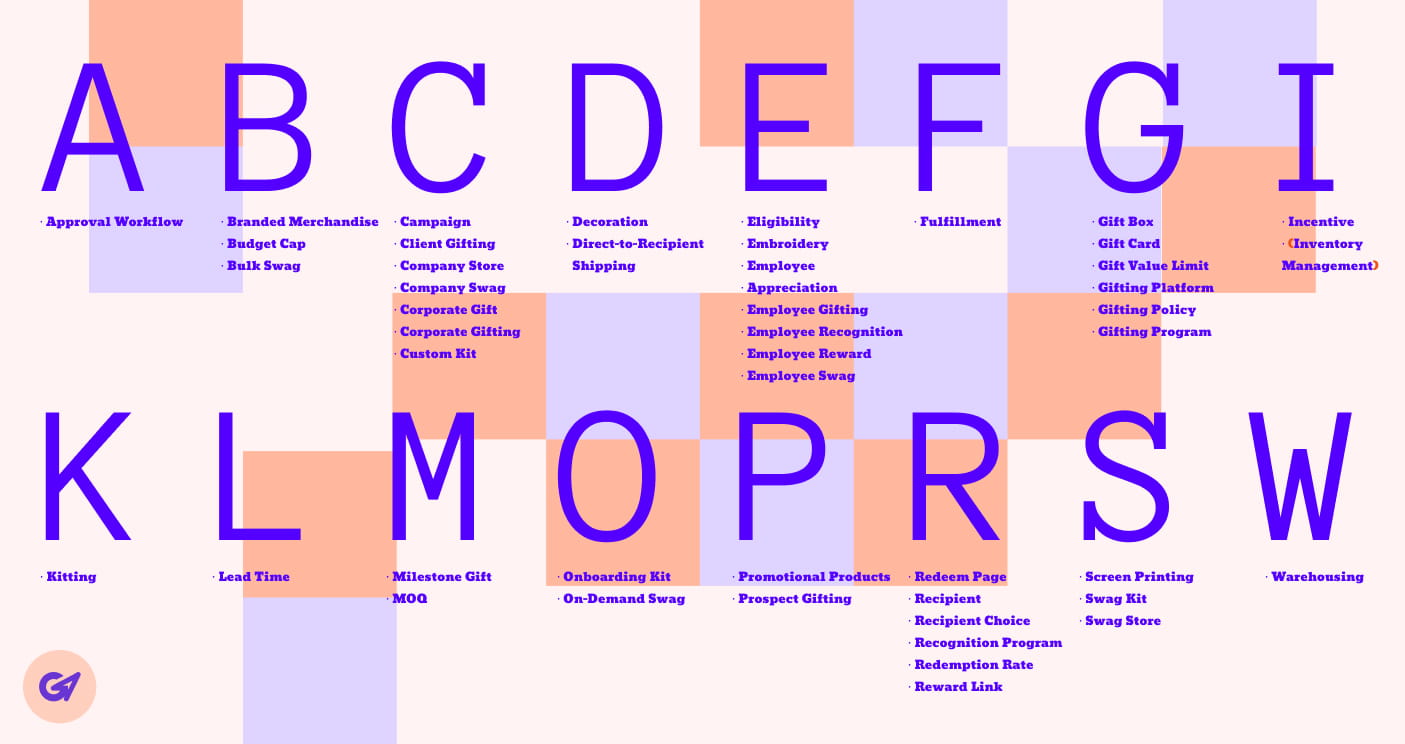
Every item in the published version should link to its permanent fragment.
A: Approval Workflow
B: Branded Merchandise · Budget Cap · Bulk Swag
C: Campaign · Client Gifting · Company Store · Company Swag · Corporate Gift · Corporate Gifting · Custom Kit
D: Decoration · Direct-to-Recipient Shipping
E: Eligibility · Embroidery · Employee Appreciation · Employee Gifting · Employee Recognition · Employee Reward · Employee Swag
F: Fulfillment
G: Gift Box · Gift Card · Gift Value Limit · Gifting Platform · Gifting Policy · Gifting Program
I: Incentive · Inventory Management
K: Kitting
L: Lead Time
M: Milestone Gift · MOQ
O: Onboarding Kit · On-Demand Swag
P: Promotional Products · Prospect Gifting
R: Redeem Page · Recipient · Recipient Choice · Recognition Program · Redemption Rate · Reward Link
S: Screen Printing · Swag · Swag Kit · Swag Store
W: Warehousing
Core Swag & Merchandise
Swag
Industry term
Definition: Swag commonly refers to branded or promotional merchandise distributed by an organization to employees, customers, prospects, partners, event attendees, or other communities.
The term can describe an individual item, a collection of branded products, a curated kit, or a larger merchandise program.
Merriam-Webster recognizes modern promotional goods uses of the word, while ASI uses swag within the broader promotional-products vocabulary.
Not the same as: Corporate gift. Swag usually implies a promotional or branded merchandise connection, while a corporate gift can be visibly branded, subtly branded, or completely unbranded.
Why the distinction matters: A conference giveaway and an executive client gift may both be physical products, but they can require completely different decisions around branding, quality, budget, personalization, packaging, and presentation.
Used by: Marketing, HR, People Operations, Events, Sales, Internal Communications, and Procurement.
Related terms: Company Swag · Employee Swag · Promotional Products · Branded Merchandise · Corporate Gift
Company Swag
Industry term
Definition: Company swag commonly refers to merchandise associated with an organization and typically carrying its name, logo, artwork, message, or other brand identity.
It can be distributed to employees, customers, candidates, partners, community members, or event attendees.
Not the same as “Employee swag.” Employee swag serves people inside the organization specifically, while company swag can support both internal and external audiences.
Why the distinction matters: A recruiting kit, customer gift, conference giveaway, employee hoodie, and partner package may all use the same corporate brand but serve very different audiences and business objectives.
Related terms: Swag · Employee Swag · Branded Merchandise · Promotional Products
Employee Swag
Industry term
Definition: Employee swag commonly refers to company-branded merchandise created or distributed specifically for employees.
It can support onboarding, culture initiatives, company events, recognition, work anniversaries, retreats, internal launches, or ongoing access to company merchandise.
Not the same as: Employee gifting. Employee swag centers on branded merchandise, while employee gifting can also include unbranded products, food, experiences, gift cards, or other rewards.
Why the distinction matters: An employee program should not assume that company-logo merchandise is the right gift for every recipient or occasion. Branding, recipient preference, and recognition context are separate decisions.
Related terms: Company Swag · Employee Gifting · Employee Recognition · Onboarding Kit · Swag Store
Promotional Products
Industry term
Definition: Promotional products are merchandise branded with a logo, message, or other identifying mark and used to promote an organization, product, service, cause, or event.
ASI’s industry definition describes promotional products as merchandise that carries a logo or message and is used for promotional purposes.
Not the same as: Corporate gifts. Promotional products normally have an explicit promotional or brand-visibility role. A corporate gift may instead prioritize appreciation, relationship-building, recognition, or a specific occasion.
Why the distinction matters: A product selected to maximize visibility at a trade show may not be appropriate for an executive gift, employee milestone, or high-touch customer relationship.
Related terms: Swag · Branded Merchandise · Corporate Gift · Decoration
Branded Merchandise
Variable usage
Definition: Branded merchandise is often used to describe physical products that carry, express, or otherwise represent a brand’s identity.
Depending on the context, the category can include promotional products, apparel, retail-style merchandise, employee merchandise, event merchandise, recognition products, licensed merchandise, and other branded physical goods.
A September 2026 study commissioned by PPAI and conducted by Oxford Economics examines branded merchandise as a broad ecosystem spanning sourcing, customization, distribution, gifting, selling, and the recipient experience, rather than restricting the category to sales by traditional promotional-product distributors. Read the PPAI study overview.
Not the same as: Promotional products. The categories overlap substantially, but promotional products usually have a defined promotional function, whereas branded merchandise can encompass a broader, more continuous merchandise ecosystem.
Why the distinction matters: A company may manage employee apparel, customer gifts, event merchandise, e-commerce products, recognition gifts, and promotional items as part of a single, larger merchandise strategy.
BlinkSwag usage: BlinkSwag uses branded merchandise as a broad physical-product category that can support employees, customers, prospects, partners, events, recognition, and gifting programs.
Related terms: Promotional Products · Swag · Company Swag · Corporate Gift
Corporate Gift
Variable usage
Definition: A corporate gift is a physical product, digital reward, experience, gift card, or other item of value given by an organization to an employee, customer, prospect, partner, speaker, vendor, or another business stakeholder.
Not the same as: Swag. A corporate gift does not need to display a logo, and its primary purpose may be appreciation, relationship-building, celebration, recognition, or another recipient-centered occasion rather than promotion.
Why the distinction matters: Treating every corporate gift as advertising can lead organizations to over-brand products that would create a better recipient experience with restrained branding or no visible branding at all.
BlinkSwag usage: A corporate gift is an individual gift or reward. Corporate gifting is the broader practice or program by which gifts are given.
Related terms: Corporate Gifting · Employee Gifting · Client Gifting · Prospect Gifting
Corporate Gifting & Recognition

Corporate Gifting
Variable usage
Definition: Corporate gifting is the organized practice of giving physical products, digital rewards, gift cards, experiences, or other items of value to people or organizations connected to a business.
Providers do not always use the term with the same audience boundaries.
BlinkSwag usage: BlinkSwag uses corporate gifting as a broad category encompassing employees, customers, prospects, partners, speakers, and other business stakeholders.
BlinkSwag’s 2026 employee recognition and corporate gifting research similarly distinguishes broader corporate gifting from the more specific practice of employee gifting.
Not the same as Promotional Product distribution. Corporate gifting starts with the recipient relationship or gifting occasion. Promotional-product distribution may primarily serve awareness, event visibility, lead generation, or another marketing objective.
Why the distinction matters: The recipient relationship can change personalization, message, budget, policy, timing, branding intensity, fulfillment, and measurement.
Used by: HR, People Operations, Sales, Marketing, Customer Success, Partnerships, Events, Procurement, and executive teams.
Related terms: Corporate Gift · Employee Gifting · Client Gifting · Prospect Gifting · Gifting Program
Employee Gifting
Industry term
Definition: Employee gifting commonly refers to gifts or rewards given to employees for occasions such as onboarding, appreciation, achievements, milestones, holidays, promotions, project completion, or other employment-related moments.
Not the same as “Employee recognition.” A gift provides tangible or experiential value. Recognition communicates what the employee contributed and why it mattered.
BlinkSwag’s recognition research treats a gift or reward as something that can extend recognition rather than replace the recognition message itself.
Why the distinction matters: Sending a product without explaining what is being acknowledged can result in distributing merchandise rather than in meaningful recognition.
Related terms: Employee Recognition · Employee Appreciation · Employee Reward · Employee Swag · Milestone Gift
Client Gifting
Industry term
Definition: Client gifting commonly refers to gifts sent to existing customers or clients to express appreciation, recognize a relationship or milestone, celebrate an occasion, or create a meaningful business touchpoint.
Not the same as: Prospect gifting. Prospect gifting targets potential customers rather than existing customer relationships.
Why the distinction matters: Existing client relationships may provide useful information about preferences, account history, milestones, location, or business context. Prospect gifting usually has less relationship context and may require a more conservative approach to personalization and gift value.
Related terms: Corporate Gifting · Corporate Gift · Prospect Gifting · Gifting Program
Prospect Gifting
Variable usage
Definition: Prospect gifting is the practice of sending a physical or digital gift to a prospective customer as part of sales outreach, account-based marketing, event follow-up, meeting generation, or relationship development.
Not the same as: Client gifting. A prospect has not yet become a customer, so existing relationship context, recipient expectations, and available preference information may be limited.
Why the distinction matters: A gift that feels appropriate in an established customer relationship can feel excessive, irrelevant, or intrusive during early-stage outreach.
Used by: Sales, Account-Based Marketing, Revenue teams, Partnerships, Events.
Related terms: Corporate Gifting · Client Gifting · Campaign · Eligibility
Employee Recognition
Industry term
Definition: Employee recognition is the acknowledgment of an employee’s contribution, behavior, progress, achievement, or milestone, including an explanation of why that contribution was valued.
BlinkSwag’s 2026 recognition research distinguishes recognition from material rewards: recognition carries meaning, while a gift, reward, experience, or branded product can extend that meaning when appropriate for the employee and occasion.
Not the same as “Employee reward”. Recognition is the acknowledgment. A reward is one possible tangible, financial, symbolic, or experiential expression associated with it.
Why the distinction matters: An organization can operate a large reward catalog while still providing weak recognition if employees do not understand what was valued or why.
Used by: Managers, HR, People Operations, executives, peers, team leaders, and Total Rewards teams.
Related terms: Employee Appreciation · Employee Reward · Recognition Program · Employee Gifting · Milestone Gift
Employee Appreciation
Variable usage
Definition: Employee appreciation commonly refers to expressing gratitude for an employee as a person and for their ongoing work, effort, presence, or contribution.
It can be informal or structured and does not have to correspond to one specific achievement.
Not the same as “Employee recognition.” Recognition is typically more specific about the contribution, behavior, result, progress, or milestone being acknowledged.
Why the distinction matters: Appreciation can support broader moments of gratitude, while recognition generally benefits from a specific explanation of what the employee did and why it mattered.
Related terms: Employee Recognition · Employee Gifting · Employee Reward · Recognition Program
Employee Reward
Variable usage
Definition: An employee reward is a tangible, financial, symbolic, or experiential benefit provided to an employee in connection with recognition, achievement, participation, performance, a milestone, or another defined program condition.
Not the same as “Employee recognition.” The reward carries value. Recognition carries meaning.
Why the distinction matters: Measuring whether an employee redeemed a reward does not automatically measure whether the recognition itself was timely, specific, authentic, equitable, or meaningful.
Related terms: Employee Recognition · Incentive · Gift Card · Recipient Choice · Recognition Program
Incentive
Industry term
Definition: An incentive is something offered or structured to encourage a desired action, behavior, participation, or result.
Depending on the program, incentives can include cash, points, merchandise, gift cards, experiences, privileges, recognition, or other benefits.
Not the same as “Employee reward”. A reward can acknowledge something after it occurs. An incentive is often established before the activity to influence future behavior or participation.
Why the distinction matters: Incentive programs usually require defined objectives, eligibility criteria, rules, measurement, and governance before participants act.
Related terms: Employee Reward · Eligibility · Recognition Program · Campaign
Milestone Gift
Variable usage
Definition: A milestone gift is a gift associated with a meaningful stage or event in a recipient’s relationship with an organization.
Examples include work anniversaries, promotions, retirements, customer anniversaries, major project completions, or other defined milestones.
Not the same as: General appreciation gifting. Appreciation gifting does not require a defined milestone or event.
Why the distinction matters: A milestone provides context for eligibility, timing, message, budget, personalization, and the appropriate significance of the gift.
Related terms: Employee Gifting · Employee Recognition · Eligibility · Corporate Gift
Gift Card
Industry term
Definition: A gift card is a prepaid or stored-value instrument that allows the recipient to redeem an assigned value with a specified merchant, network, marketplace, or participating group of merchants, depending on the card type.
Not the same as: Reward Link. A gift card is one type of reward. A Reward Link can provide access to a curated selection of gift cards, physical products, company merchandise, or other approved rewards.
Why the distinction matters: Organizations choosing between direct gift cards and a recipient-choice workflow may need to consider budget control, available choice, branding, delivery, reporting, and administration.
U.S. employee-program note: IRS Publication 15-B states that cash and cash-equivalent fringe benefits, including gift cards, are not excluded as de minimis fringe benefits merely because their value is small. Organizations should apply their own payroll, finance, tax, and legal policies to employee gift cards and other cash-equivalent rewards.
This is a U.S.-specific consideration, not universal global guidance.
Related terms: Employee Reward · Recipient Choice · Reward Link · Gifting Program
Program Governance & Recipient Controls
Gifting Program
Industry term
Definition: A gifting program is a structured system for deciding who receives gifts, for which occasions or triggers, under what budget and policy rules, through which gift or reward options, and how those gifts are delivered and measured.
Not the same as: Campaign. A gifting program can operate continuously and contain multiple campaigns, audiences, occasions, and workflows.
Why the distinction matters: Without program-level rules, organizations can develop inconsistent budgets, fragmented vendors, unclear approvals, duplicate gifting, and weak reporting.
Used by: HR, Sales, Marketing, Customer Success, Partnerships, Procurement, Finance, Operations.
Related terms: Gifting Policy · Recipient · Eligibility · Budget Cap · Campaign
Recognition Program
Industry term
Definition: A recognition program is a structured approach to acknowledging employee contributions, behaviors, achievements, progress, or milestones.
Depending on its design, a recognition program can include manager recognition, peer recognition, written or verbal acknowledgment, awards, points, gifts, experiences, or other rewards.
Not the same as: Gifting program. Recognition begins with acknowledgment and meaning. Gifting is one mechanism that may be included in the experience.
Why the distinction matters: Counting the number of gifts distributed does not establish whether employees received timely, specific, authentic, equitable, or relevant recognition.
Related terms: Employee Recognition · Employee Reward · Eligibility · Recipient Choice · Gifting Program
Gifting Policy
Variable usage
Definition: A gifting policy is a documented set of rules governing how an organization gives or receives business gifts.
Depending on the organization, industry, and jurisdiction, it may address recipient categories, gift-value thresholds, approvals, prohibited circumstances, conflicts of interest, recordkeeping, tax treatment, and compliance requirements.
Some organizations use one policy for gifts the organization gives, and a separate policy for gifts employees are permitted to accept from suppliers, customers, partners, public-sector contacts, or other third parties.
Not the same as: Gifting program. The program describes how gifting operates. The policy defines the boundaries within which that activity is permitted.
Why the distinction matters: A well-designed gifting experience can still create financial, ethical, tax, procurement, or compliance problems if acceptable recipients, values, and approval rules are unclear.
Related terms: Gift Value Limit · Approval Workflow · Eligibility · Gifting Program
Compliance note: Tax, anti-bribery, procurement, employment, privacy, gift-acceptance, and related requirements vary by jurisdiction, industry, recipient type, and organizational policy. This glossary explains terminology and should not be treated as legal, tax, or compliance advice.
Recipient
Industry term
Definition: A recipient is the person or organization intended to receive a gift, reward, merchandise item, recognition experience, kit, or other program benefit.
Not the same as: Eligibility. A recipient is the actual or intended receiver. Eligibility determines who qualifies.
Why the distinction matters: Recipient type can affect product selection, personalization, budget, privacy, shipping, messaging, policies, and program administration.
Used by: HR, Sales, Marketing, Customer Success, Procurement, Operations, and fulfillment teams.
Related terms: Eligibility · Recipient Choice · Corporate Gifting · Gifting Program
Eligibility
Industry term
Definition: Eligibility is the set of rules used to determine whether a person, account, event, transaction, or other participant qualifies to receive a gift, reward, recognition benefit, or campaign offer.
Not the same as: Recipient status. Someone can belong to the intended audience without satisfying the criteria for a specific reward or campaign.
Why the distinction matters: Clearly defined eligibility supports consistency, fairness, budget control, automation, and program governance.
Example: A company-wide service program may apply to all employees, while a milestone gift becomes available only after a specified tenure threshold is met.
Related terms: Recipient · Approval Workflow · Gifting Policy · Campaign
Recipient Choice
Industry term
Definition: Recipient choice allows the recipient to select from a defined set of approved gifts, rewards, sizes, styles, gift cards, or other options, rather than automatically receiving a predetermined item.
Not the same as: Unlimited choice. An organization can still control budget, assortment, availability, branding, geography, and eligibility while providing meaningful choice.
Why the distinction matters: Recipient choice can accommodate differences in apparel size, dietary requirements, lifestyle, location, device ownership, product preference, and products a recipient already owns.
Related terms: Recipient · Gift Card · Reward Link · Budget Cap · Gifting Program
Approval Workflow
Industry term
Definition: An approval workflow is the defined sequence of permissions or reviews required before a gift, reward, campaign, budget, order, exception, or other program action can proceed.
Not the same as: Eligibility. Eligibility determines whether the recipient qualifies. Approval determines whether the proposed action is authorized.
Why the distinction matters: Approval workflows can help organizations control spending, enforce gifting policies, document exceptions, and establish responsibility for higher-value or sensitive gifts.
Used by: Managers, Finance, Procurement, HR, Sales Operations, Compliance.
Related terms: Gifting Policy · Budget Cap · Gift Value Limit · Eligibility
Budget Cap
Variable usage
Definition: A budget cap is the maximum amount that can be spent within a defined part of a gifting or rewards program.
A cap can apply to a recipient, campaign, department, program, period, or transaction.
Not the same as: Gift value limit. A budget cap controls available spending. A gift value limit controls the permitted value of an individual gift.
Why the distinction matters: A campaign can have a large total budget while still limiting how much may be spent on any one recipient. Those controls solve different financial-governance problems.
Related terms: Gift Value Limit · Approval Workflow · Gifting Program · Campaign
Gift Value Limit
Variable usage
Definition: A gift value limit is the maximum permitted monetary value of an individual gift or reward under an organization’s gifting policy, program rules, approval requirements, or compliance framework.
Not the same as “Budget cap.” A budget cap controls how much can be spent across a campaign, department, recipient allocation, or program. A gift value limit restricts the maximum value of a single gift.
Why the distinction matters: An organization may have a sufficient campaign budget for a high-value gift yet still require additional approval or prohibit the gift because it exceeds an individual value threshold.
Gift value limits can vary by recipient type, relationship, jurisdiction, occasion, company policy, and regulatory environment.
Related terms: Budget Cap · Gifting Policy · Approval Workflow · Recipient
Campaign
Industry term
Definition: A campaign is a defined initiative for gifting, merchandise, recognition, marketing, or engagement, organized around a specific audience, objective, message, budget, timing, or trigger.
Examples include an onboarding gift campaign, a customer holiday campaign, an employee-appreciation campaign, a conference merchandise campaign, or a prospect-gifting initiative.
Not the same as: Gifting program. A program can operate continuously and contain multiple campaigns, audiences, occasions, budgets, and workflows.
Why the distinction matters: Individual campaigns can use different eligibility rules, products, creatives, budgets, fulfillment methods, and measurement even when they operate within the same broader program.
Related terms: Gifting Program · Recipient · Eligibility · Budget Cap · Redemption Rate
Kits & Recipient Experience
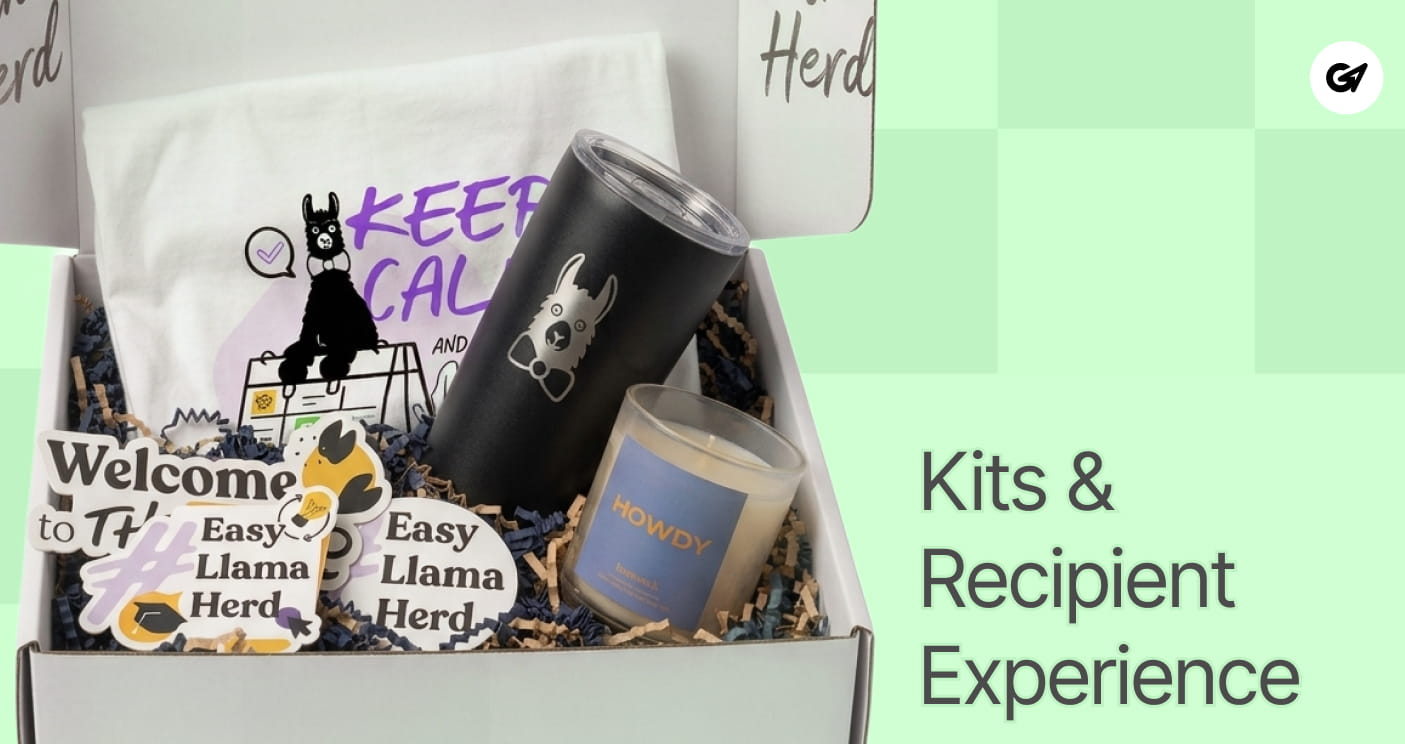
Onboarding Kit
Industry term
Definition: An onboarding kit is a curated collection of products, information, or resources provided to a new employee, customer, partner, or other participant as part of an onboarding experience.
An employee onboarding kit might contain apparel, drinkware, notebooks, technology accessories, company information, role-specific resources, or a personalized welcome message.
Not the same as “Swag kit”. An onboarding kit has a specific onboarding purpose. A swag kit can be created for almost any audience, campaign, event, or occasion.
Why the distinction matters: A strong onboarding kit should support the recipient’s introduction to the organization rather than simply maximize the quantity of branded products included.
Related terms: Employee Swag · Swag Kit · Gift Box · Kitting · Direct-to-Recipient Shipping
Swag Kit
Variable usage
Definition: A swag kit is a curated collection of branded merchandise assembled and distributed together for a particular audience, campaign, event, team, or occasion.
Examples can include conference kits, remote-team kits, employee-appreciation kits, launch kits, and customer welcome kits.
Not the same as: Kitting. A swag kit is the finished collection. Kitting is the operational process for assembling it.
Why the distinction matters: Selecting the contents of a swag kit is a merchandise and recipient-experience decision. Kitting involves assembly, packaging, inventory coordination, and fulfillment.
Related terms: Onboarding Kit · Gift Box · Custom Kit · Kitting · Fulfillment
Gift Box
Industry term
Definition: A gift box is a packaged collection of one or more products presented together as a gifting experience.
It can contain branded merchandise, retail products, food, apparel, drinkware, printed messages, custom packaging, or completely unbranded gifts.
Not the same as “Swag kit”. The terms can overlap, but a gift box usually emphasizes gifting and presentation, while a swag kit more strongly implies branded merchandise.
Why the distinction matters: An executive gift box may call for premium packaging and restrained branding, while an event swag kit may prioritize visibility, quantity, portability, and relevance to the event.
Related terms: Corporate Gift · Swag Kit · Custom Kit · Kitting
Custom Kit
Variable usage
Definition: A custom kit is a collection assembled around an organization’s specific product selection, audience, branding, packaging, messaging, or program requirements, rather than a fixed, preconfigured assortment.
Not the same as: Standard gift set. A standard set usually contains a predetermined combination of products, while a custom kit is built around the requirements of a specific program.
Why the distinction matters: Greater customization can improve recipient relevance but may introduce additional sourcing, inventory, quantity, packaging, production, kitting, and fulfillment requirements.
Related terms: Swag Kit · Gift Box · Kitting · Lead Time · Inventory Management
Redeem Page
Variable usage
Also called the claim page and redemption page.
Definition: A redeem page is a digital destination where an authorized recipient can claim, select, customize, or provide delivery information for a gift or reward.
Not the same as “Swag store”. A redeem page is usually associated with a particular recipient, campaign, or reward event. A swag store normally provides ongoing access to merchandise.
Why the distinction matters: Claim-based workflows can allow recipients to select an item, size, style, address, or other required information only when they choose to accept the reward.
Related terms: Reward Link · Recipient Choice · Eligibility · Campaign
Reward Link
BlinkSwag platform term
Definition: At BlinkSwag, a Reward Link is a recipient-specific digital link that gives an approved recipient access to a curated reward experience. Depending on the campaign configuration, available choices may include physical products, company merchandise, and gift cards, all within a defined budget.
Not the same as “Gift card”. A gift card is one possible reward. A Reward Link can provide access to a selection of approved reward types.
Why the distinction matters: Reward Links allow the organization to define the budget and available assortment while giving the recipient meaningful control over the final selection.
This can be particularly useful when recipients differ in apparel size, location, product preferences, lifestyle, or the products they already own.
Related terms: Recipient Choice · Gift Card · Redeem Page · Budget Cap · Campaign
Platforms & Program Infrastructure
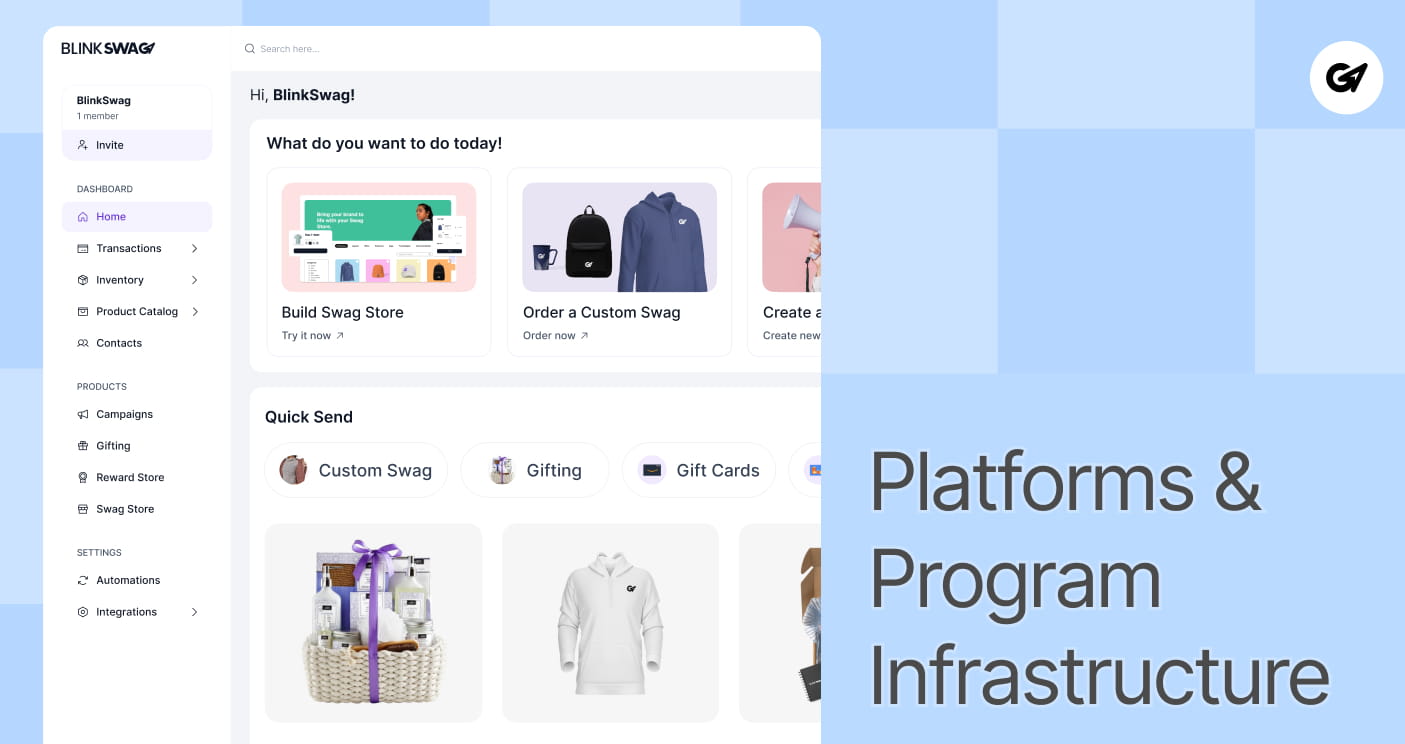
Swag Store
Industry term
Definition: A swag store is a branded online storefront where approved users can browse, order, purchase, or redeem company merchandise.
Depending on the program, users can include employees, customers, partners, franchisees, event participants, sales teams, or community members.
Not the same as: Gifting platform. A swag store primarily provides access to merchandise. A gifting platform can support workflows for broader recipient, reward, campaign, budget, approval, redemption, and fulfillment.
Why the distinction matters: A company that only needs employees to order approved branded apparel may require a different system from an organization managing onboarding gifts, customer gifting, milestone recognition, digital rewards, and distributed fulfillment.
BlinkSwag usage: A swag store is the recipient-facing merchandise interface. In broader industry usage, providers may also use swag store to describe the supporting inventory, fulfillment, and merchandise-management infrastructure behind that storefront.
Related terms: Company Store · Gifting Platform · On-Demand Swag · Inventory Management · Fulfillment
Company Store
Industry term
Definition: A company store is a branded storefront through which employees, customers, distributors, partners, or other approved audiences can access company merchandise or approved goods.
The term may also describe stores supporting uniforms, workwear, sales collateral, employee allowances, recognition products, or external purchases.
Not the same as: Swag store, although the terms often overlap. A swag store usually focuses on distributing branded merchandise, while a company store can refer to a broader internal or external commerce environment.
Why the distinction matters: The intended audience and business model determine pricing, permissions, inventory, product assortment, payment method, and fulfillment requirements.
Related terms: Swag Store · Company Swag · Gifting Platform · Inventory Management
Gifting Platform
Variable usage
Definition: A gifting platform is software or technology infrastructure used to manage some combination of recipients, gift selection, physical gifts, digital rewards, campaigns, budgets, approvals, redemption, fulfillment, and reporting.
Providers use the term differently, so there is no single feature set shared by every gifting platform.
Not the same as “Swag store”. A swag store centers on access to merchandise. A gifting platform can support broader gifting workflows without requiring a permanent merchandise storefront.
Why the distinction matters: Organizations should evaluate the workflow and capabilities they actually need rather than assume every product marketed as a gifting platform provides the same functionality.
Used by: HR, People Operations, Marketing, Sales, Customer Success, Procurement, Operations.
Related terms: Gifting Program · Swag Store · Reward Link · Recipient Choice · Fulfillment
On-Demand Swag
Industry term
Definition: On-demand swag is a merchandise model in which products are produced, decorated, allocated, and/or fulfilled in response to an order or redemption event, rather than committing the entire anticipated program quantity to finished inventory in advance.
Providers can use the term differently depending on whether production, decoration, or fulfillment actually occurs after the order is placed.
Not the same as: Bulk swag. Bulk swag generally involves producing larger quantities in advance.
Why the distinction matters: On-demand models can reduce exposure to excess finished inventory and support greater assortment flexibility, while bulk production may offer different pricing, product availability, production speed, and unit economics.
Related terms: Bulk Swag · Swag Store · Inventory Management · Lead Time · Fulfillment
Bulk Swag
Industry term
Definition: Bulk swag refers to branded merchandise ordered or produced in larger quantities, usually before individual recipient demand is known.
Typical uses include conferences, company events, employee programs, onboarding inventory, customer campaigns, and major product launches.
Not the same as: On-demand swag. Bulk swag creates finished inventory in advance, while on-demand models respond more directly to recipient orders or redemptions.
Why the distinction matters: Bulk purchasing can improve unit economics and campaign readiness, but it also introduces risks related to forecasting, storage, leftover stock, and obsolescence.
Related terms: MOQ · Inventory Management · Warehousing · On-Demand Swag · Fulfillment
Branding & Production
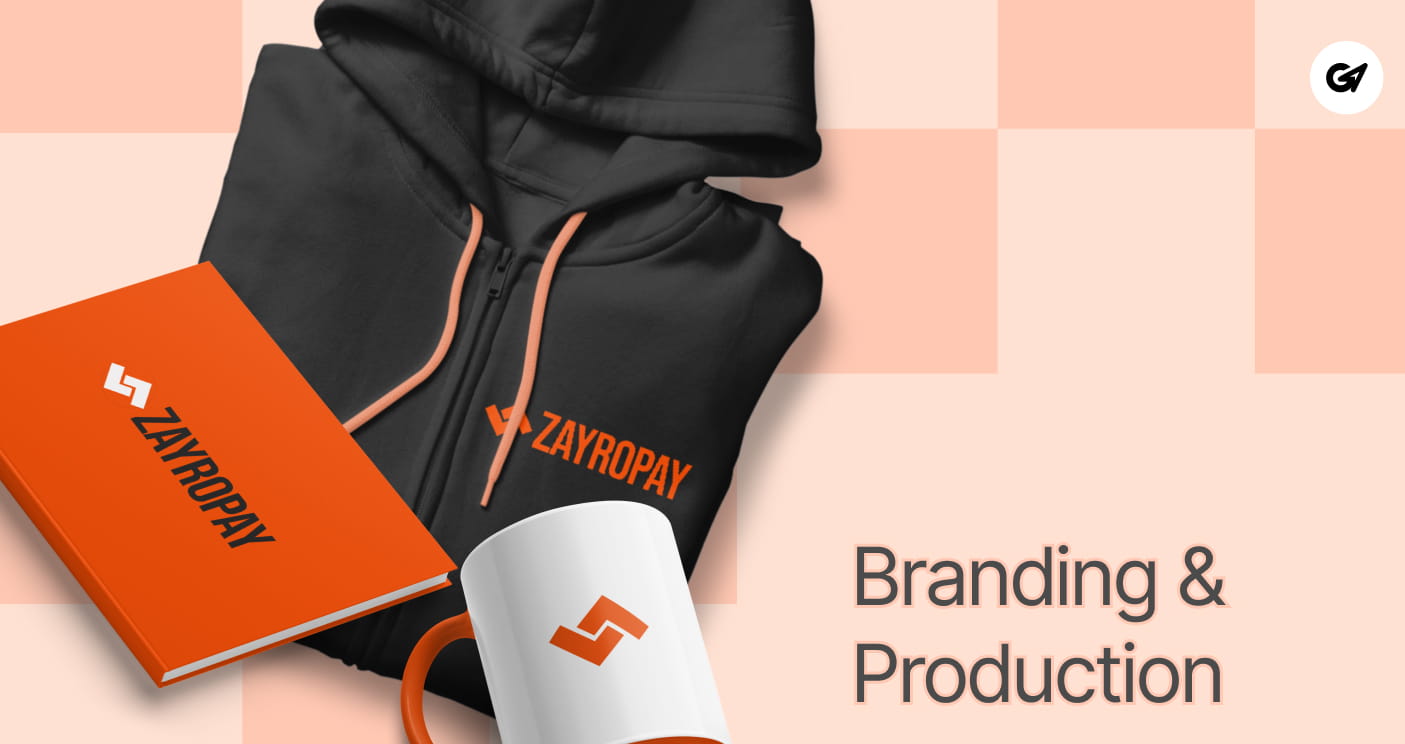
Decoration
Industry term
Definition: Decoration is the process of adding branding, artwork, names, messages, or other visual elements to a product.
Common techniques include screen printing, embroidery, laser engraving, heat transfer, debossing, and digital printing.
Not the same as “Product manufacturing.” A blank product can be manufactured first and later decorated by another supplier or through another production process.
Why the distinction matters: Decoration method can affect appearance, durability, available colors, imprint size, setup requirements, production time, and cost.
Related terms: Screen Printing · Embroidery · Promotional Products · Branded Merchandise
Screen Printing
Industry term
Definition: Screen printing is a decoration method that transfers ink through a prepared screen onto a product surface, commonly apparel and textiles.
Not the same as: Embroidery, which creates the design with stitched thread rather than ink.
Why the distinction matters: Product material, artwork, order quantity, desired finish, color requirements, budget, and production constraints can affect which method is more appropriate.
Related terms: Decoration · Embroidery · Branded Merchandise · Promotional Products
Embroidery
Industry term
Definition: Embroidery is a textile decoration method that creates a design by stitching thread directly into fabric or another suitable material.
It is commonly used on polos, hats, jackets, backpacks, quarter zips, and workwear.
Not the same as: Screen printing, which applies ink to the product surface.
Why the distinction matters: Embroidery can create a durable, dimensional finish, but some artwork, fine detail, or very large graphics may be better suited to another decoration method.
Related terms: Decoration · Screen Printing · Company Swag · Branded Merchandise
Procurement, Fulfillment & Logistics
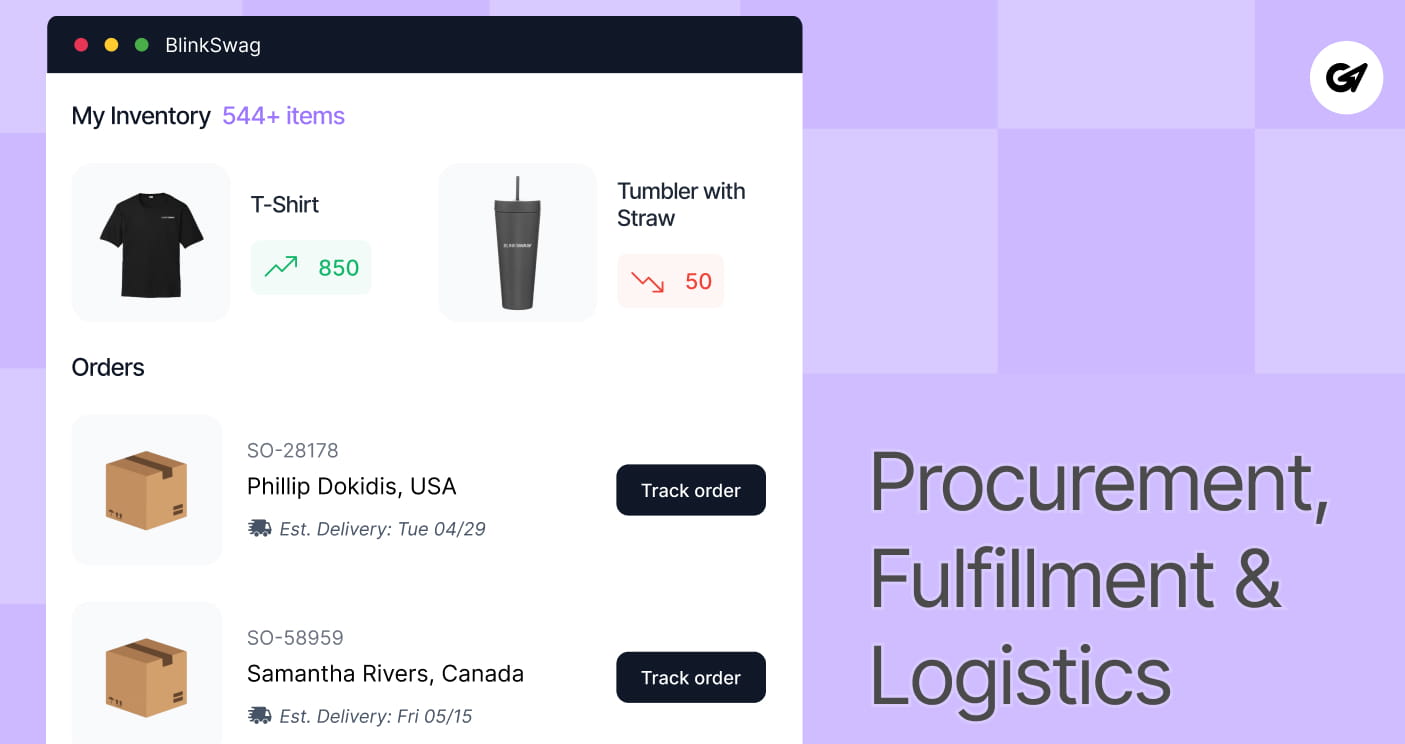
MOQ
Industry term
Definition: MOQ stands for minimum order quantity, the smallest quantity of a particular product, configuration, or production run that a supplier is willing to accept under specified conditions.
Not the same as “Quantity break”. MOQ determines whether an order can be placed. A quantity break determines when pricing changes as volume increases.
Why the distinction matters: MOQ can affect program feasibility, inventory exposure, unit economics, product choice, and whether a particular item is appropriate for a small recipient group.
Used by: Buyers, Procurement teams, merchandise suppliers, decorators, and production teams.
Related terms: Bulk Swag · Lead Time · Inventory Management · Gifting Program
Lead Time
Industry term
Definition: Lead time is the amount of time required for an order, product, or process to move from a defined starting point to a defined readiness or completion point.
In swag and corporate gifting, lead time can include product availability, artwork approval, decoration, production, kitting, fulfillment preparation, and transit. Because suppliers may calculate lead time differently, buyers should confirm exactly what a quoted timeline includes.
Not the same as: Production time. Production time usually refers more specifically to the time required to make or decorate the product.
Why the distinction matters: Confusing production time with total lead time can result in missed event, campaign, or recipient deadlines.
For deadline-sensitive orders, also confirm the in-hand date, meaning the date by which the products need to arrive at the recipient or destination.
Related terms: MOQ · Kitting · Fulfillment · Campaign
Kitting
Industry term
Definition: Kitting is the operational process of combining multiple products, printed materials, packaging components, or other items into one finished kit before distribution.
For example, an onboarding kit may require a hoodie, a bottle, a notebook, a welcome card, and a custom package to be assembled into a single shipment.
Not the same as “Swag kit”. The swag kit is the finished collection. Kitting is the assembly process that creates it.
Why the distinction matters: Kitting can affect labor, inventory coordination, packaging, personalization, quality control, storage, and fulfillment costs.
Related terms: Swag Kit · Custom Kit · Fulfillment · Warehousing · Inventory Management
Fulfillment
Industry term
Definition: Fulfillment is the operational process of preparing and completing orders for delivery.
Depending on the provider, fulfillment can include receiving inventory, storage, order processing, picking, packing, kitting, labeling, dispatch, tracking, and related logistics activities.
Not the same as: Shipping. Shipping is the transportation of a package from one location to another. Fulfillment covers the broader workflow required to prepare and process the order.
Why the distinction matters: Access to a shipping carrier does not automatically provide the infrastructure required for individual recipient orders, inventory management, personalized kits, returns, or multi-campaign distribution.
Used by: Operations, Procurement, HR, Marketing, Sales Operations, warehouse teams, logistics providers.
Related terms: Kitting · Warehousing · Inventory Management · Direct-to-Recipient Shipping · Swag Store
Direct-to-Recipient Shipping
Variable usage
Definition: Direct-to-recipient shipping is the practice of sending a gift, merchandise order, kit, or reward directly to the recipient’s delivery address rather than first sending the entire order to a company office, event venue, or central distribution point.
It can also be described as direct-to-home delivery when recipients are being served at residential addresses, although the terms are not always identical.
Not the same as “Bulk shipment”. A bulk shipment sends a larger quantity to one destination for later distribution.
Why the distinction matters: Direct delivery can support remote and distributed recipients but introduces additional considerations around address collection, privacy, delivery failures, tracking, international shipping, and per-package costs.
Related terms: Fulfillment · Recipient · Reward Link · Campaign · Warehousing
Warehousing
Industry term
Definition: Warehousing is the physical storage of products or inventory in a facility before they are ordered, assembled, distributed, or otherwise used.
Not the same as: Inventory management. Warehousing concerns the physical storage of goods. Inventory management concerns how stock is tracked, allocated, replenished, and controlled.
Why the distinction matters: Warehouse space alone does not provide accurate stock visibility, replenishment planning, or inventory governance.
Related terms: Inventory Management · Fulfillment · Bulk Swag · Kitting
Inventory Management
Industry term
Definition: Inventory management is the process of tracking and controlling product availability, stock levels, movement, allocation, replenishment, and consumption over time.
For a swag program, that can include monitoring product variants, apparel sizes, available units, reserved inventory, campaign allocation, replenishment thresholds, and aging stock.
Not the same as: Warehousing. Warehousing provides physical storage. Inventory management is the control system governing what is stored and how that stock moves.
Why the distinction matters: Poor inventory management can contribute to stockouts, excess merchandise, unavailable sizes, obsolete products, duplicate purchasing, and unnecessary storage.
Related terms: Warehousing · Bulk Swag · On-Demand Swag · Swag Store · Fulfillment
Measurement & Reporting
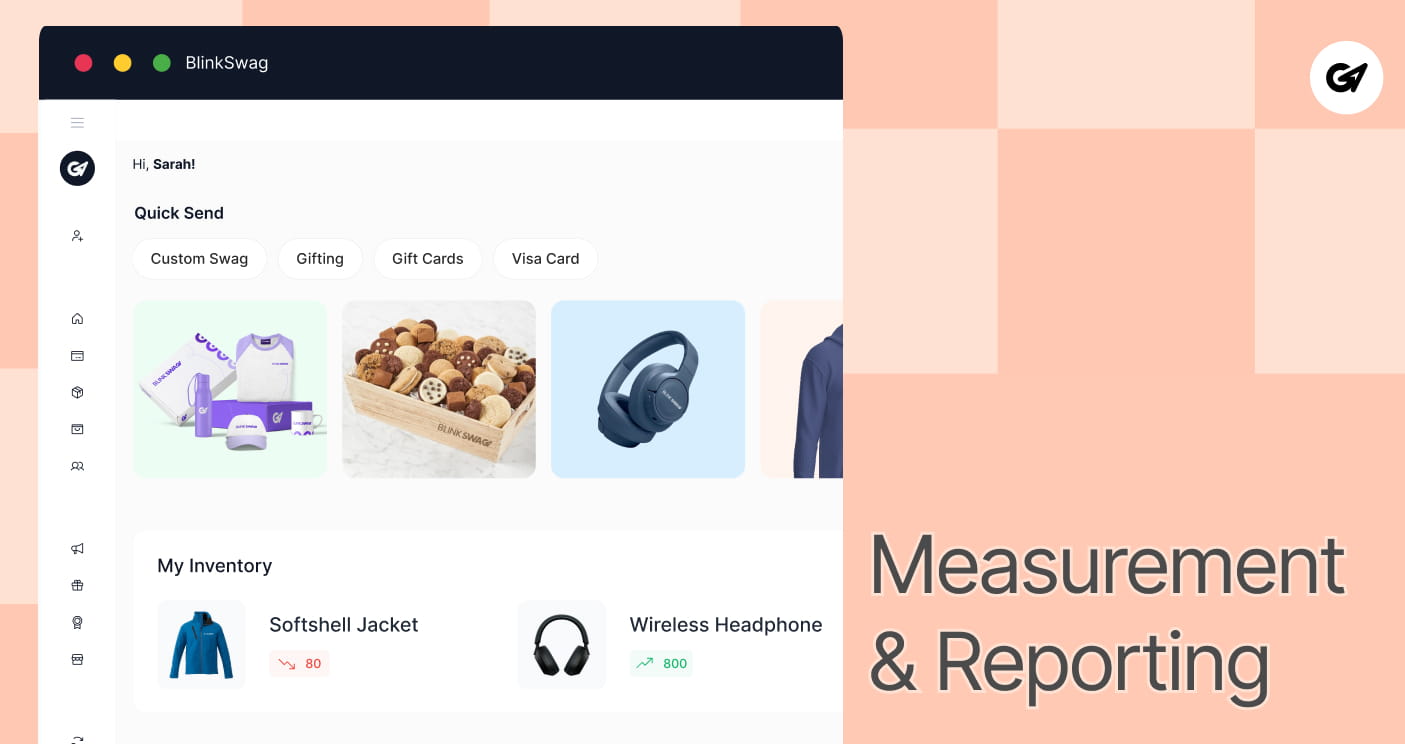
Redemption Rate
Industry term
Definition: Redemption rate is the percentage of eligible or invited recipients who successfully claim, use, or redeem an offered gift, reward, code, benefit, or campaign opportunity during a defined measurement period.
A general calculation is:
Redemption Rate=Successful Claims or RedemptionsStated Eligible, Invited, or Delivered Population×100\text{Redemption Rate} = \frac{\text{Successful Claims or Redemptions}} {\text{Stated Eligible, Invited, or Delivered Population}} \times 100
The denominator should always be identified. A company might calculate redemption against eligible recipients, successfully delivered invitations, issued links, or another clearly defined population.
Not the same as: Engagement, satisfaction, recognition quality, retention, or business impact.
Why the distinction matters: A high redemption rate indicates that recipients claimed the value offered. It does not, by itself, prove that recipients liked the gift, that the recognition was meaningful, or that the campaign caused a downstream business result.
Redemption rate is therefore an operational behavior metric, not evidence for every outcome associated with the program.
Related terms: Campaign · Eligibility · Reward Link · Recipient Choice · Gifting Program
How BlinkSwag Defines Terms
Some swag and corporate gifting terms have relatively stable meanings. Others vary by supplier, platform, business model, or jurisdiction.
BlinkSwag uses authoritative government or standards sources when a relevant formal definition exists, established trade and industry sources where terminology is conventional, and explicit BlinkSwag labeling for product or platform concepts defined by BlinkSwag.
Where usage varies, this glossary explains how BlinkSwag uses the term rather than presenting one provider’s convention as universal.
The goal is straightforward:
Use precise language where the evidence supports precision, and calibrated language where the market does not.
Definitions are reviewed periodically and whenever material industry terminology, relevant policy guidance, or BlinkSwag platform terminology changes.
Compliance note: Tax, anti-bribery, procurement, employment, privacy, gift-acceptance, and other requirements vary by jurisdiction, industry, recipient type, and organizational policy. This glossary explains terminology and does not provide legal, tax, or compliance advice.
A Shared Vocabulary for Better Swag and Corporate Gifting Decisions
Corporate gifting and merchandise programs often involve several teams looking at the same system from different angles.
Marketing may think in terms of swag, campaigns, branded merchandise, and promotional products.
HR may focus on employee recognition, appreciation, eligibility, and recipient choice.
Procurement may care about MOQ, lead time, suppliers, and inventory.
Operations may be responsible for kitting, warehousing, fulfillment, and direct shipping.
Finance and governance teams may focus on budgets, gift-value limits, approvals, and policies.
The recipient may care about something much simpler: whether the gift is relevant, valuable, and easy to receive.
A useful glossary, therefore, should not stop at:
What does this term mean?
It should also help answer:
What is it different from?
Why does that difference matter?
What decision does it affect?
What should I understand next?
That is the purpose of the BlinkSwag Swag & Corporate Gifting Glossary: to create a shared vocabulary for planning, buying, governing, producing, distributing, and measuring better merchandise and gifting programs.