If you’ve spent any time in human resources, you’ve probably come across the acronym SHRM.
You may have seen it attached to professional credentials, local HR chapters, massive annual conferences, training programs, or even listed as a preferred qualification in enterprise job descriptions.
But what is SHRM exactly, and why is it such a dominant, household name in the HR world?
Whether you’re new to the personnel field, thinking about accelerating your career with a certification, or planning your very first trip to the massive annual expo floor, understanding what SHRM does can help you get more value from your career and the broader HR community.
In this comprehensive guide, we’ll cover what SHRM is, its evolution, the certifications and membership options it offers, and why its Annual Conference & Expo has become one of the single biggest events in the global business landscape.
What Does SHRM Stand For?
SHRM stands for the Society for Human Resource Management.
Founded in 1948, SHRM has grown into the world’s largest professional association dedicated entirely to human resources. Today, the organization supports HR professionals, enterprise business leaders, educators, and people managers across more than 180 countries.
Its core goal is simple: help create better workplaces where both employees and organizations can succeed.
Over its 75+ year history, SHRM’s focus has fundamentally expanded. While it began by tracking traditional payroll and administrative tasks, it now leads global research on modern workplace culture, employee experience, talent management, and workforce planning.
A Brief History & Evolution of SHRM
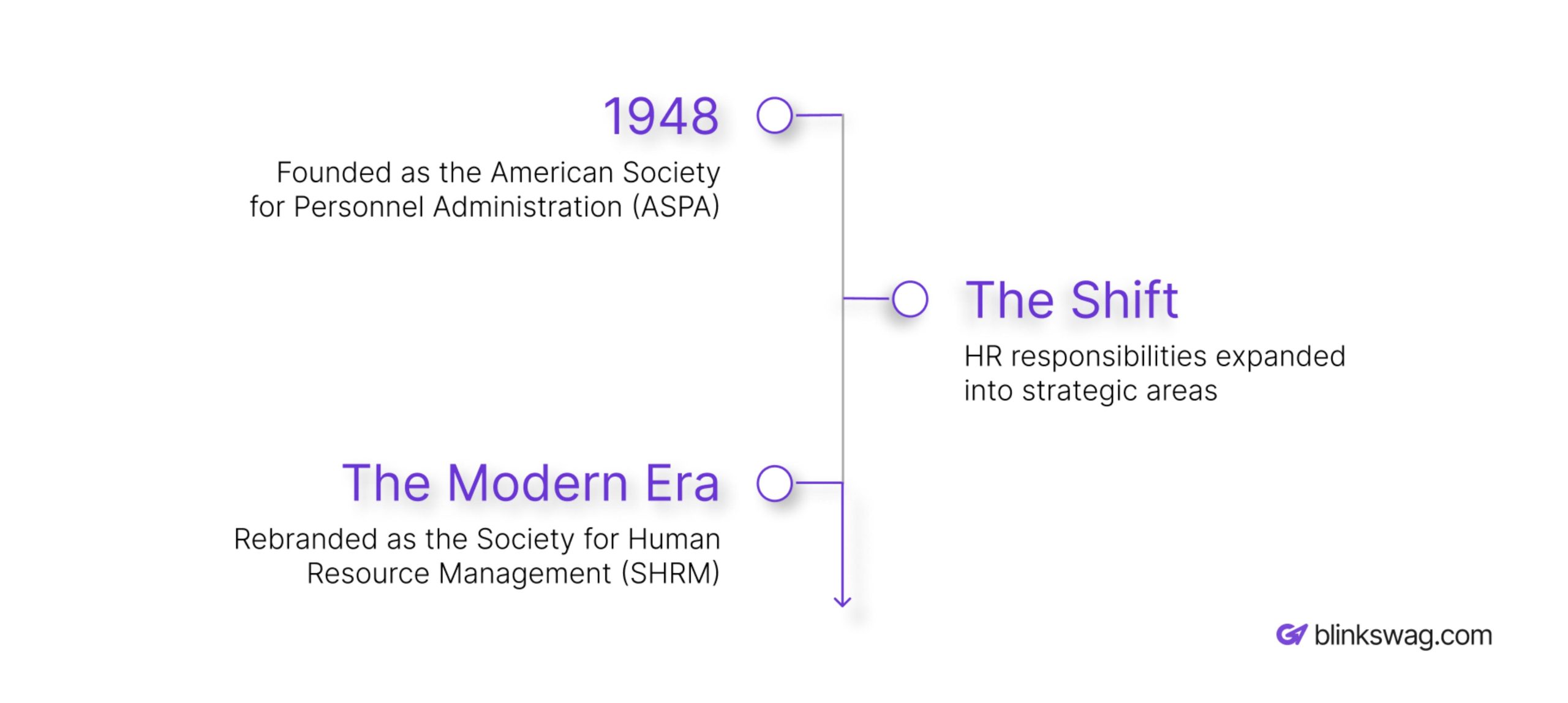
SHRM’s story began in 1948 when it was founded as the American Society for Personnel Administration (ASPA). At that time, personnel management was heavily transactional, focused mainly on processing payroll, distributing basic benefits, and handling strict employment administration.
As corporate structures changed, HR responsibilities grew far beyond paperwork. HR became a vital component of hiring strategy, leadership development, culture engineering, and high-level corporate growth. To reflect this strategic shift, ASPA officially rebranded itself as the Society for Human Resource Management.
Today, SHRM plays a major role in global HR education, executive certifications, workplace research, and professional development.
- 1948: Founded as the American Society for Personnel Administration (ASPA), handling basic transactional payroll, traditional benefits, and strict employment administration.
- The Shift: As corporate structures matured, HR’s responsibilities expanded heavily into leadership tracking, culture engineering, and high-level corporate strategy.
- The Modern Era: To reflect its strategic global seat at the executive table, ASPA officially rebranded itself as the Society for Human Resource Management.
What Does SHRM Do?
In simple terms, SHRM is the centralized learning ecosystem, research hub, and compliance resource that HR professionals turn to at every stage of their careers. The organization actively tracks and educates professionals across nine core operational areas:
| Talent & Acquisition | Culture & Experience | Compliance & Law |
| Recruiting & Hiring Strategy | Employee Engagement | Employment & Labor Laws |
| Performance Management | Workplace Culture Trends | Workplace Compliance Risks |
| Learning & Development | Leadership Development | Public Policy & Advocacy |
To keep the industry informed, SHRM channels its efforts into five primary pillars of action:
1. Professional Development
Workplace trends, technologies, and regulations change fast. SHRM helps professionals stay up to date through a steady stream of online courses, live webinars, interactive workshops, continuous learning programs, and specialized industry publications.
2. Certifications
One of SHRM’s most globally recognized offerings is its professional credentialing program. Many HR professionals pursue these certifications to systematically strengthen their knowledge and demonstrate their real-world expertise to employers.
3. Research and Industry Insights
SHRM regularly publishes data-driven research and reports that track micro- and macroeconomic workforce trends. These reports provide organizations with clear visibility into talent shortages, shifts in employee engagement, and the future of workplace demographics.
4. Workplace Advocacy
SHRM helps HR professionals navigate complex federal, state, and local labor regulations. The organization frequently acts as an advocacy voice in public policy, providing clear compliance resources that help businesses make safer, better-informed decisions.
5. Networking and Community
One of the biggest benefits of the organization is the professional community it creates. Members can connect through local SHRM chapters, regional state councils, dedicated online forums, and major professional events, creating clear avenues for career opportunities and shared peer support.
SHRM Membership Explained
SHRM membership acts as an operational toolkit for individual practitioners and teams. Rather than searching the web for generic forms or unverified compliance advice, a standard membership grants direct access to a wide range of verified resources:
- HR Templates and Tools: Pre-built job descriptions, interview rubrics, employee handbooks, and policy templates.
- Research Reports: In-depth data on salary benchmarking, benefits packages, and remote work shifts.
- Educational Content: Access to whitepapers, expert-led webinars, and daily industry news updates.
- Community Forums: Digital networking spaces to swap advice and vendor recommendations with global peers.
- Financial Discounts: Reduced pricing on certification prep materials, exam fees, and annual conference tickets.
Like any professional association membership, the value you get from it depends entirely on how consistently your team uses the platform tools.
SHRM Certifications Explained: CP vs. SCP
One of the main reasons professionals interact with the SHRM name is to obtain professional credentials. SHRM offers two primary benchmark certifications that demonstrate real-world problem-solving mastery, tailored to different stages of an HR career:
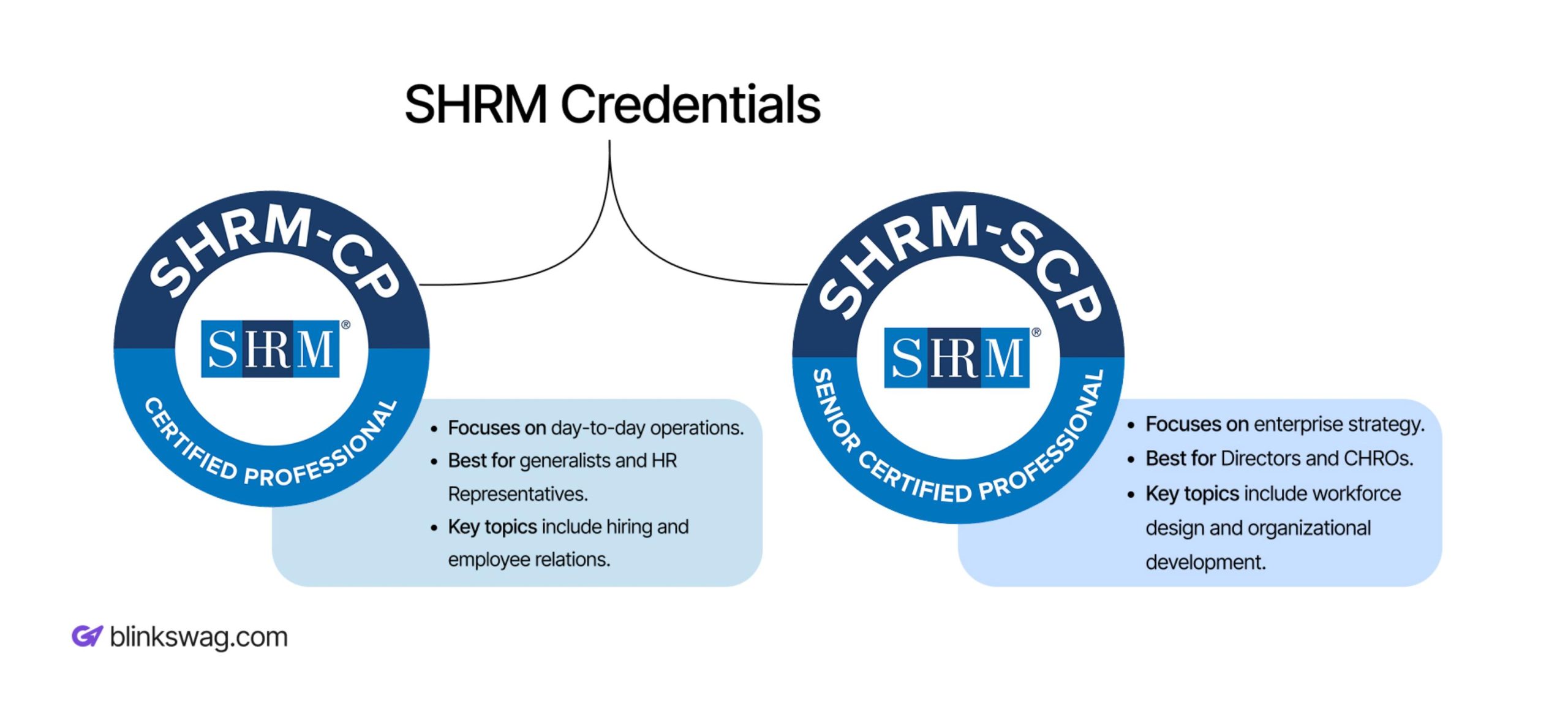
| Feature | SHRM-CP (Certified Professional) | SHRM-SCP (Senior Certified Professional) |
| Primary Focus | Day-to-day operations and tactical execution. | Strategic leadership and organizational design. |
| Best Suited For | Generalists, HR representatives, and operational managers. | HR Directors, Senior Managers, CHROs, and Executives. |
| Key Core Topics | Recruiting, employee relations, payroll, and core compliance. | Long-term workforce planning, business metrics, and strategy. |
1. SHRM-CP (Certified Professional)
The SHRM-CP credential is designed for HR professionals who handle day-to-day operational execution. This exam tests foundational HR knowledge and situational judgment across core functions such as recruiting, employee relations, payroll administration, talent management, and baseline local compliance.
2. SHRM-SCP (Senior Certified Professional)
The SHRM-SCP credential is designed specifically for seasoned HR leaders who drive organizational strategy. This exam focuses heavily on long-term workforce planning, corporate policy formation, executive leadership, business metrics, and high-level structural decision-making. It is typically pursued by Directors, VPs, and Chief Human Resources Officers (CHROs).
Is SHRM Certification Worth It?
While not a mandatory legal license to practice HR, a professional credential functions as a powerful career accelerator for four clear reasons:
- Professional Credibility: Certification can demonstrate commitment to the profession and a strong understanding of modern HR practices.
- Career Growth: Some employers view certification as a highly valuable qualification when hiring or promoting HR professionals.
- Knowledge Development: Preparing for the comprehensive exam helps strengthen your understanding of critical, complex HR topics.
- Networking Opportunities: Certification programs often help professionals connect deeply with others in the shared HR community.
While certification isn’t legally required for every single HR role, many professionals find it immensely helpful throughout their careers.
The SHRM Annual Conference & Expo
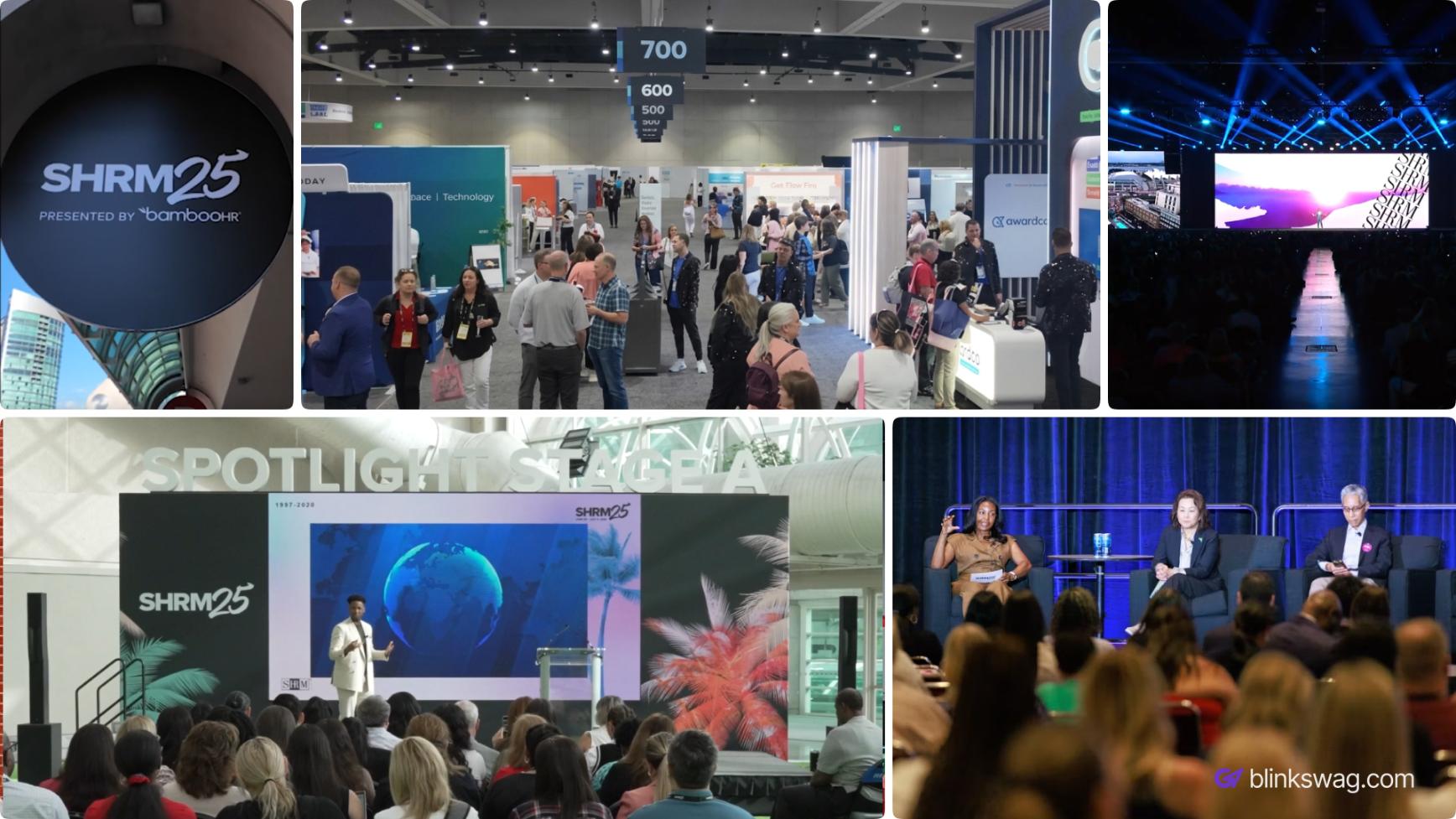
For many HR professionals, SHRM isn’t just another conference, it’s one of the biggest events of the year.
Every year, thousands of HR professionals come together to learn, meet peers, discover new solutions, and exchange ideas.
Many attendees leave with new knowledge, new connections, and practical takeaways they can use right away.
What Is the Annual Conference?
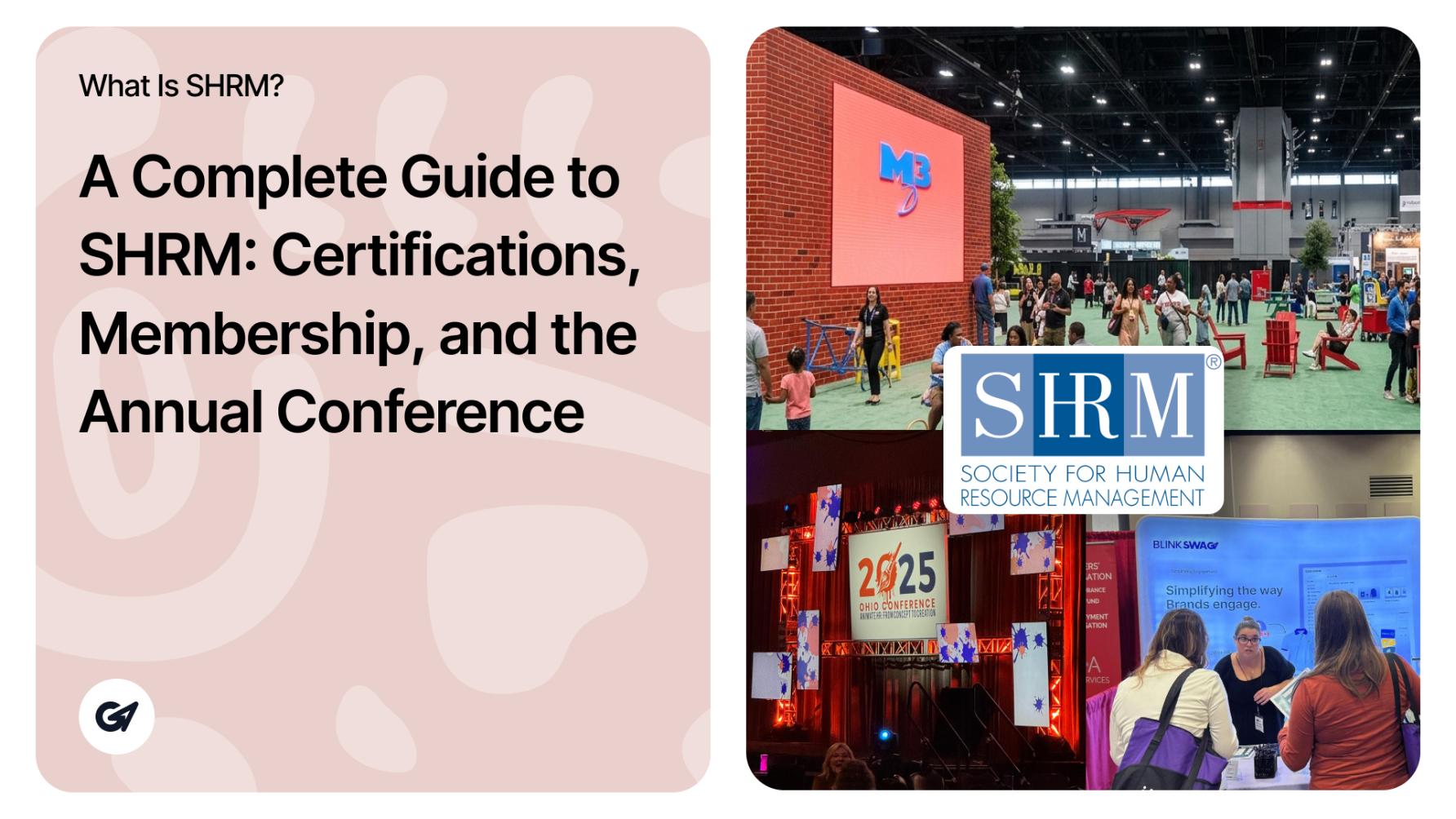
The SHRM Annual Conference & Expo is a massive, multi-day event that serves as a centralized melting pot for the entire people operations industry.
The event typically features:
- Hundreds of Educational Sessions: Led by industry compliance experts, legal scholars, and corporate trailblazers.
- Mainstage Keynote Speakers: Presenting high-level perspectives on global leadership, economic trends, and cultural movements.
- Professional Credit Building: Direct opportunities to earn a significant chunk of your required recertification PDCs in one single trip.
- The Massive Expo Hall: A high-energy footprint where hundreds of software suites, platform builders, and corporate service providers showcase the future of workplace management.
- Structured Workshops: Immersive, deep-dive learning experiences designed to give you practical, step-by-step frameworks you can instantly apply to your organization.
- Live Product Demos: Direct, hands-on access to test upcoming platform technologies, compare vendor capabilities side-by-side, and see software rollouts in real time.
- Unmatched Networking Opportunities: Built-in social events, regional chapter meetups, and casual floor spaces designed to connect you with thousands of global peers to swap strategies and build lasting professional relationships.
Why Do HR Professionals Attend?
Attendees structure their schedules around four primary motivations:
- To Learn: Breakout tracks dive straight into real-world challenges, such as implementing AI workflows safely, managing multi-generational workforces, and tracking pay equity compliance.
- To Network: Bringing together thousands of practitioners from completely different fields allows peers to share real, unvarnished strategies for scaling culture across different industries.
- To Discover New Solutions: Walking the expo floor allows teams to cut through digital sales funnels and evaluate tools face-to-face.
- To Bring Value Back: Attendees leave with tangible frameworks and operational updates they can pitch to their leadership teams immediately.
What Happens at the SHRM Expo?
The Expo hall is the operational engine of the conference floor. Featuring hundreds of physical exhibitors, it gives procurement and people teams a direct chance to test tools in real time.
Visitors can watch live software rollouts, test physical products, compare vendor pricing models side-by-side, and meet the specific teams behind the apps they use daily. It is where abstract conversations about “employee engagement” turn into concrete, actionable platform solutions.
It’s also where many of the most valuable conversations happen.
Attendees can talk directly with the companies behind the products and services they use every day.
Who Typically Attends?
The event attracts professionals from a wide array of backgrounds, including:
- HR Managers & Generalists: Seeking practical ideas to improve day-to-day operations.
- Recruiters & TA Specialists: Looking for modern approaches to competitive hiring and retention.
- HR Executives & CHROs: Focusing on long-term corporate governance, workforce design, and fiscal strategy.
- People Operations Teams: Investigating modern employee recognition, automated onboarding, and cultural tools.
- Business Owners & Executives: Looking to align their corporate growth strategy with solid, compliant talent practices.
What We’ve Learned From Attending SHRM
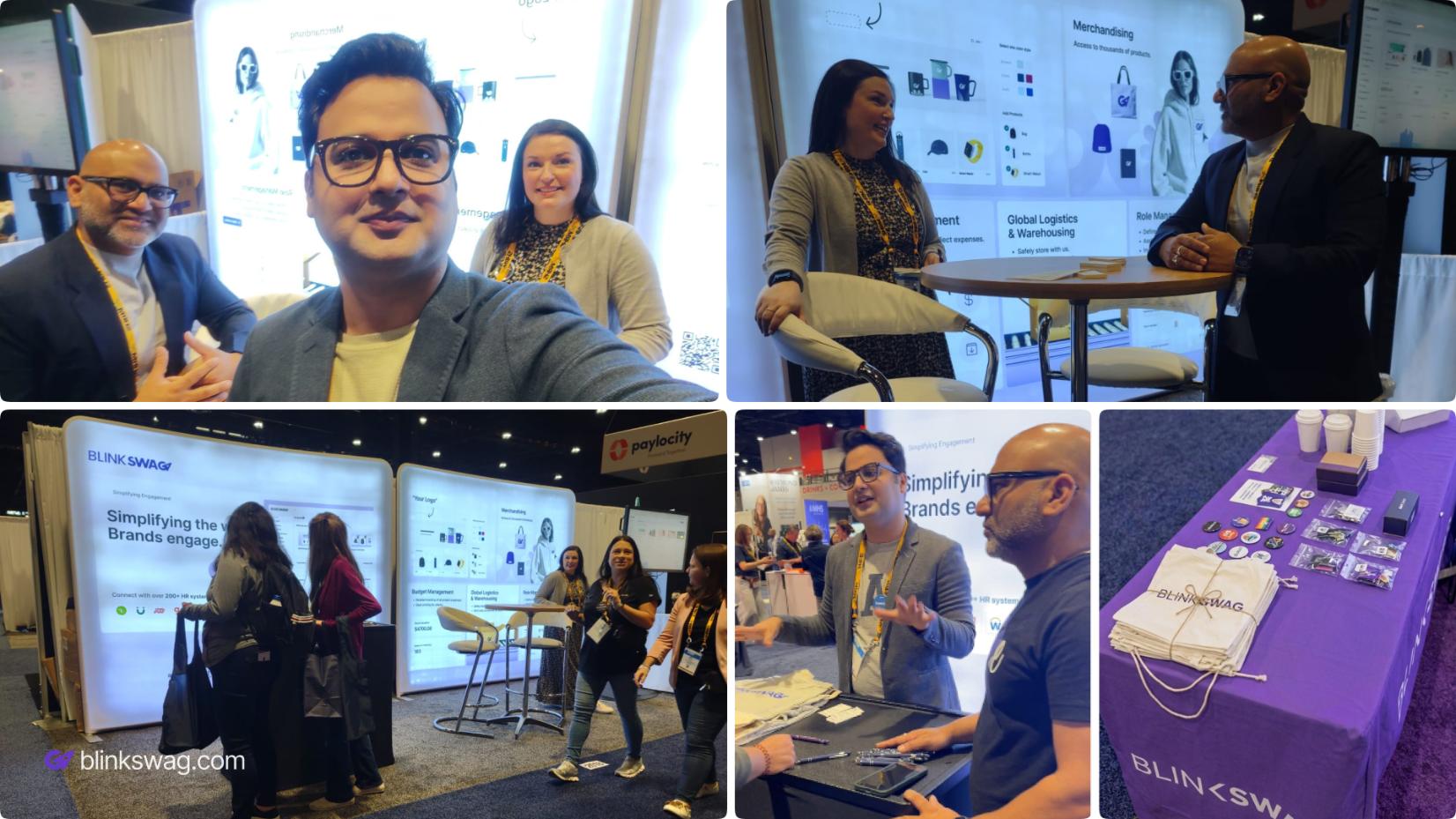
BlinkSwag has attended SHRM for several years, and every event has felt a little different.
Over time, we’ve seen conversations shift from hybrid work and employee retention to recognition programs, automation, onboarding experiences, and supporting global teams.
The topics change every year, but one thing stays the same: companies that invest in their people create better employee experiences.
Some of the most valuable insights don’t come from keynote sessions. They come from conversations with HR leaders who face real workplace challenges every day.
That’s one of the reasons we continue to attend SHRM year after year.
Tips for First-Time SHRM Attendees
Navigating an event of this scale can quickly feel overwhelming if you don’t go in with a clear strategy. Here is our team’s quick field guide for maximizing your experience:
- Go In With an Operational Blueprint: Don’t just wander around collecting brochures and random trinkets. Identify your department’s single biggest workflow bottleneck before you arrive, and actively seek out the vendors built to solve it.
- Step Onto the Expo Floor Early: The educational tracks are phenomenal, but the live, hands-on tool innovation happens inside the expo hall. Dedicate focused hours to exploring booths when your energy levels are highest.
- Prioritize Quality Over Volume: When evaluating tools, especially employee experience, recognition, or automated gifting platforms, pay attention to the details. If a vendor hands you cheap, flimsy, or generic promo items at their own booth, it’s a direct reflection of the quality and care your remote employees will experience when they unbox a package at home.
- Protect Your Energy: Wear incredibly comfortable walking shoes, carry a reusable water bottle, and leave breathing room in your schedule for spontaneous coffee networking.
Frequently Asked Questions About SHRM
What does SHRM stand for?
SHRM stands for the Society for Human Resource Management.
What is SHRM known for?
SHRM is widely known for its professional HR certifications (SHRM-CP and SHRM-SCP), continuous professional development programs, workplace policy research, legislative advocacy, and its massive Annual Conference & Expo.
What is the SHRM Annual Conference?
The SHRM Annual Conference & Expo is one of the largest HR gatherings in the world, bringing together thousands of HR professionals, business leaders, industry speakers, and technical exhibitors.
Who can attend SHRM events?
SHRM events are open to HR generalists, talent acquisition leaders, recruiters, business executives, corporate consultants, students, educators, and third-party workforce solution providers.
What are SHRM certifications?
They are professional credentials (SHRM-CP and SHRM-SCP) earned by passing a comprehensive exam that tests an individual’s mastery of technical HR knowledge and behavioral competencies.
Is SHRM certification worth it?
For many practitioners, earning a certification provides instant industry credibility, helps bypass corporate hiring filters, unlocks higher earning potential, and sharpens strategic management skills.
Is SHRM only for HR professionals?
No. While HR practitioners make up the majority of its members, SHRM also directly serves corporate executives, legal compliance officers, educators, consultants, and people managers looking to optimize their workforce.
Why do companies attend SHRM?
Organizations attend to discover cutting-edge HR technologies, stay ahead of evolving labor compliance laws, network with global industry peers, and evaluate real-world solutions to improve their employees’ experience.
Final Thoughts
For more than 75 years, SHRM has helped HR professionals learn, grow, and stay connected to the industry.
Through its certifications, events, educational programs, research, and member community, SHRM has become one of the most recognized organizations in HR.
Whether you’re considering membership, working toward certification, or planning to attend your first conference, SHRM offers valuable opportunities to learn and connect with others in the profession.
For BlinkSwag, SHRM has also been a great place to meet HR leaders, learn about the challenges they’re facing, and see how workplace priorities continue to change from year to year.
✈️ Heading to Orlando for #SHRM26?
We’d love to meet the faces behind your workforce. Stop by Booth #3565 to grab a premium giveaway, watch our automated platform workflows live, and discover how easy global employee appreciation can be.