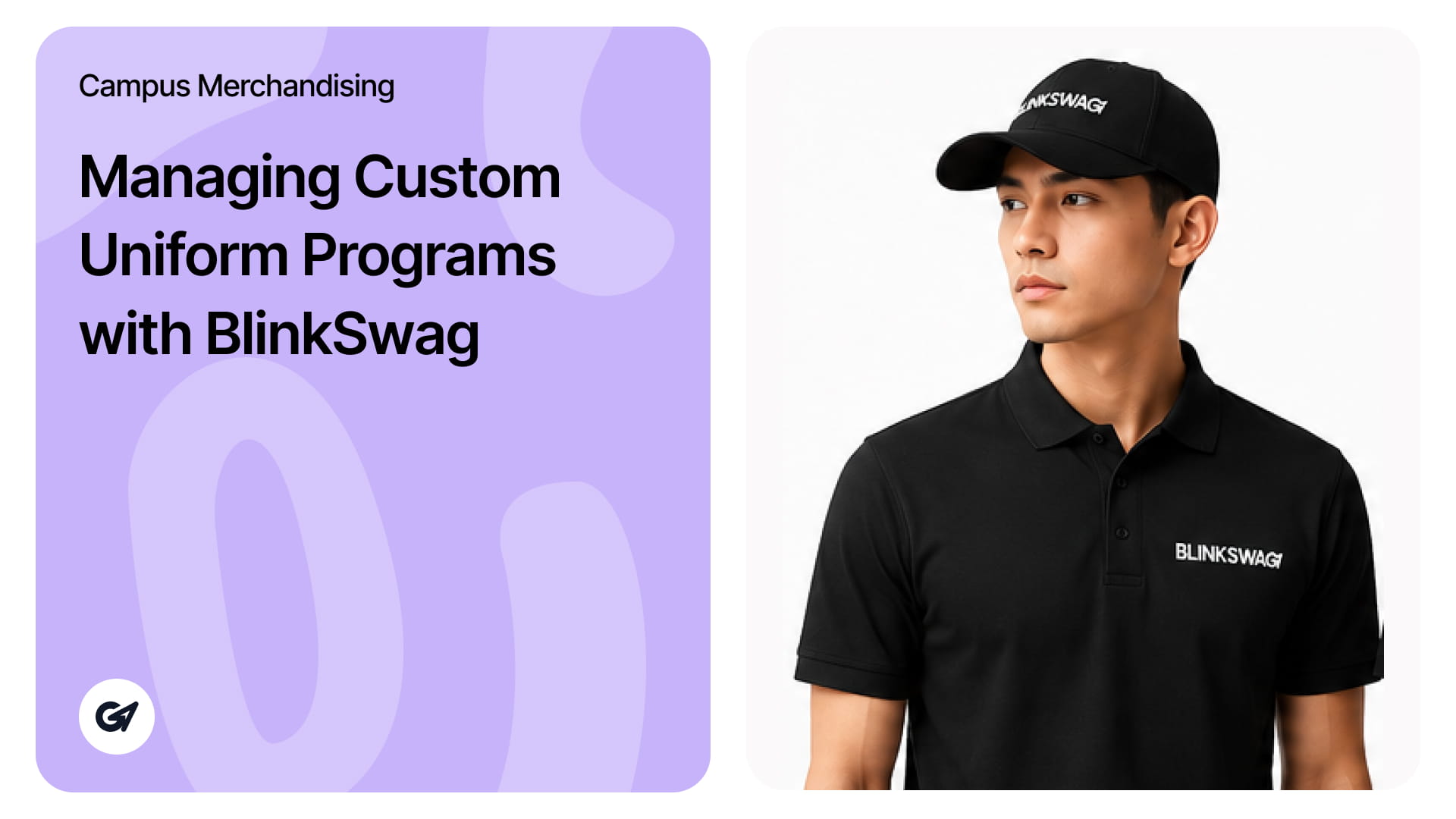
Most uniform programs do not fail overnight.
They fail quietly.
A delayed onboarding kit. A mismatched logo across locations. A spreadsheet that no longer reflects reality. A manager ordering from a different vendor “just this once.”
Individually, these are small issues. Together, they reveal a deeper problem:
The system behind your uniform program no longer works.
This is the point where uniforms stop being a simple operational task and become a complex challenge across brand consistency, inventory control, and employee experience.
This is where BlinkSwag changes the model.
BlinkSwag is not a uniform vendor. It is a branded apparel management platform that centralizes the design, distribution, and management of uniforms at scale.
Uniforms, onboarding kits, employee swag, event apparel, and recognition rewards all live in one system, aligned to your brand, governed by rules, and fulfilled seamlessly across your organization.
This is how modern companies manage uniform programs.
Who This Guide Is For
This guide is built for organizations that have outgrown manual uniform processes and need a scalable system.
It is especially relevant for:
- HR teams managing onboarding and employee experience
- Operations leaders responsible for multi-location consistency
- Brand managers protecting visual identity
- Procurement teams controlling apparel spend
- Franchise and distributed organizations
If your current process relies on spreadsheets, vendor coordination, or manual approvals, this guide will show you how to modernize it with BlinkSwag.
Why Uniform Programs Break Down
Uniform programs rarely start broken.
They start simple.
A vendor is selected. Orders are placed manually. Sizes are collected through email. It works, until it does not.
As organizations grow, the cracks appear.
Brand Inconsistency
Different locations begin sourcing independently. Colors drift. Logos vary. The brand loses its consistency at the customer-facing level.
Manual Ordering Chaos
HR and operations teams manage requests through spreadsheets and emails. Every new hire or replacement becomes a manual task.
No Budget Control
Without structured allowances, employees over-order, departments duplicate purchases, and finance lacks visibility.
Inventory Waste
Bulk ordering without real data leads to excess stock, incorrect sizes, and unused inventory.
Onboarding Delays
New employees often wait days or weeks for uniforms, weakening first impressions and the quality of onboarding.
No Central Visibility
Uniform data is scattered across systems. There is no single source of truth.
These issues compound as the organization scales.
The Hidden Cost of Unmanaged Uniform Programs
The cost of uniforms is not the garment itself.
It is everything around it.
Inventory Inefficiency
Without demand-based planning, organizations overstock to avoid shortages, tying up capital and creating waste.
Replacement Losses
Uniforms are lost, untracked, or replaced repeatedly, without visibility into the reasons for these occurrences.
Administrative Overhead
HR and operations teams spend significant time managing orders, vendors, and issues.
Compliance Risk
In regulated roles, incorrect uniform distribution can create safety and legal exposure.
Brand Erosion
Inconsistent uniforms weaken customer trust and reduce perceived professionalism.
The key insight:
Most uniform program costs stem from inefficiency, not from apparel.
What Is a Managed Uniform Program?
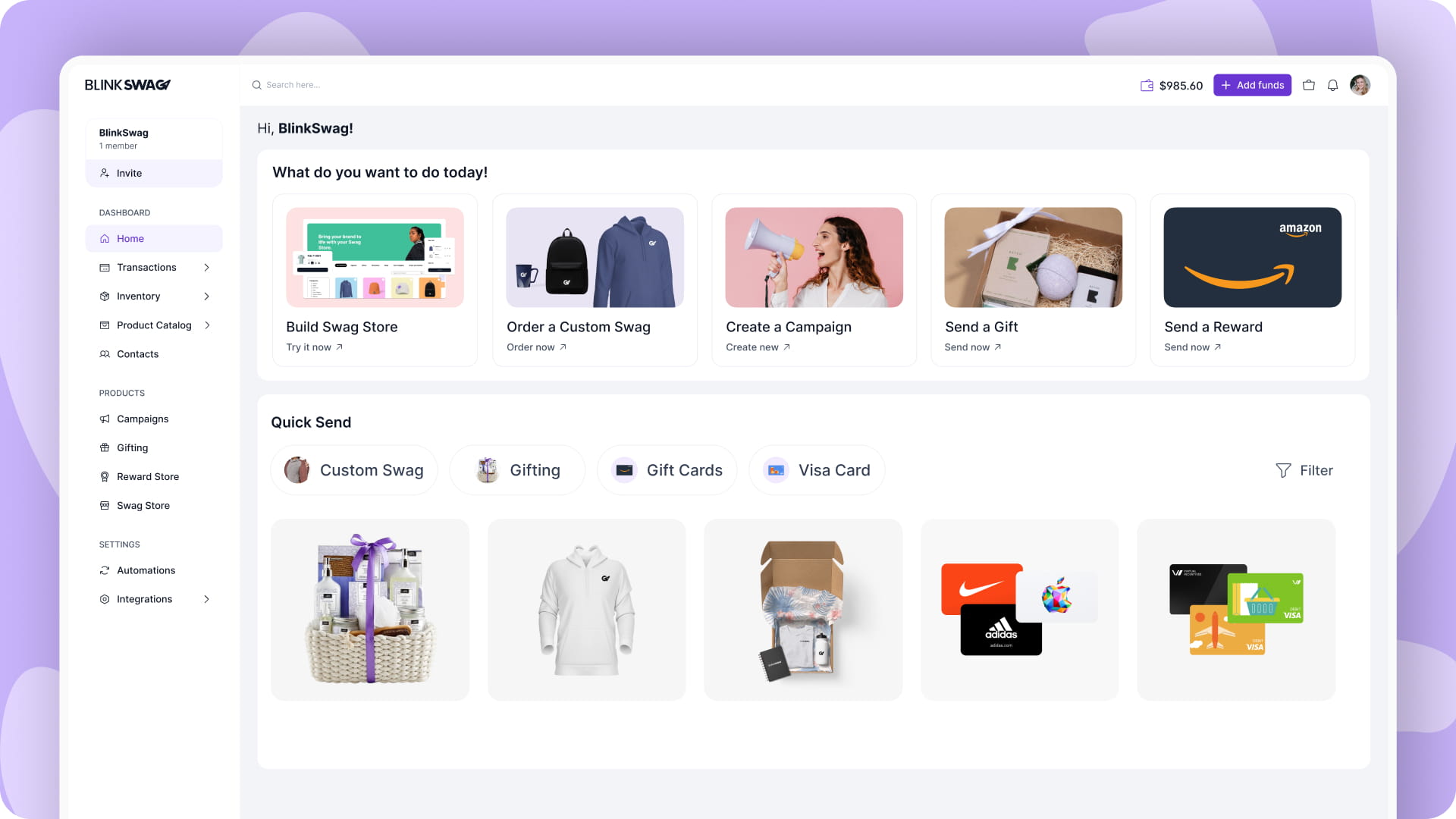
A managed uniform program is a centralized system that controls how employee apparel is designed, ordered, distributed, and tracked.
It replaces manual processes with structured workflows.
A complete program includes:
- Brand standardization
- Centralized ordering systems
- Employee allowances and controls
- Inventory management
- Fulfillment and logistics
- Reporting and compliance
BlinkSwag connects all of these into a single platform.
The Business Case for a Managed Uniform Program
Uniform programs influence more than operations.
They impact employee experience and retention.
Workforce research across multiple industries has shown that structured, uniform programs are associated with:
- Higher employee satisfaction
- Stronger sense of professionalism
- Improved onboarding experience
- Increased brand alignment
The consistent pattern is clear:
Organizations that treat uniforms as part of employee experience see stronger engagement outcomes.
This reframes uniforms from an operational expense to a strategic investment.
Choosing the Right Uniform Program Model
Not all uniform programs are built the same.
| Model | Best For | Limitation |
| Ad-hoc vendors | Small teams | No scalability |
| Managed vendor | Industrial use | Limited flexibility |
| Software platform | Procurement teams | No fulfillment |
| BlinkSwag platform | Growing organizations | Full system control |
BlinkSwag represents the modern model:
uniforms + swag + onboarding + fulfillment in one system
BlinkSwag vs Traditional Approaches
| Capability | Vendor | Software | BlinkSwag |
| Sourcing | Yes | No | Yes |
| Ordering portal | Limited | Yes | Yes |
| Allowances | Rare | Yes | Yes |
| Swag integration | No | No | Yes |
| Fulfillment | Partial | No | Yes |
| Onboarding kits | No | Limited | Yes |
BlinkSwag combines all layers into one system.
How BlinkSwag Modernizes Uniform Programs
Centralized Company Store
A branded portal where employees order uniforms and merchandise.
Each employee sees only what they are allowed to order.
Allowance Automation
Budgets are assigned automatically.
No approvals, no spreadsheets, no manual tracking.
Inventory and Fulfillment
BlinkSwag manages warehousing and ships directly to:
- Locations
- Offices
- Employee homes
HRIS Integration
New hires trigger automatic onboarding kits and uniform fulfillment.
No delays. No manual coordination.
Designing Uniforms Employees Actually Want to Wear
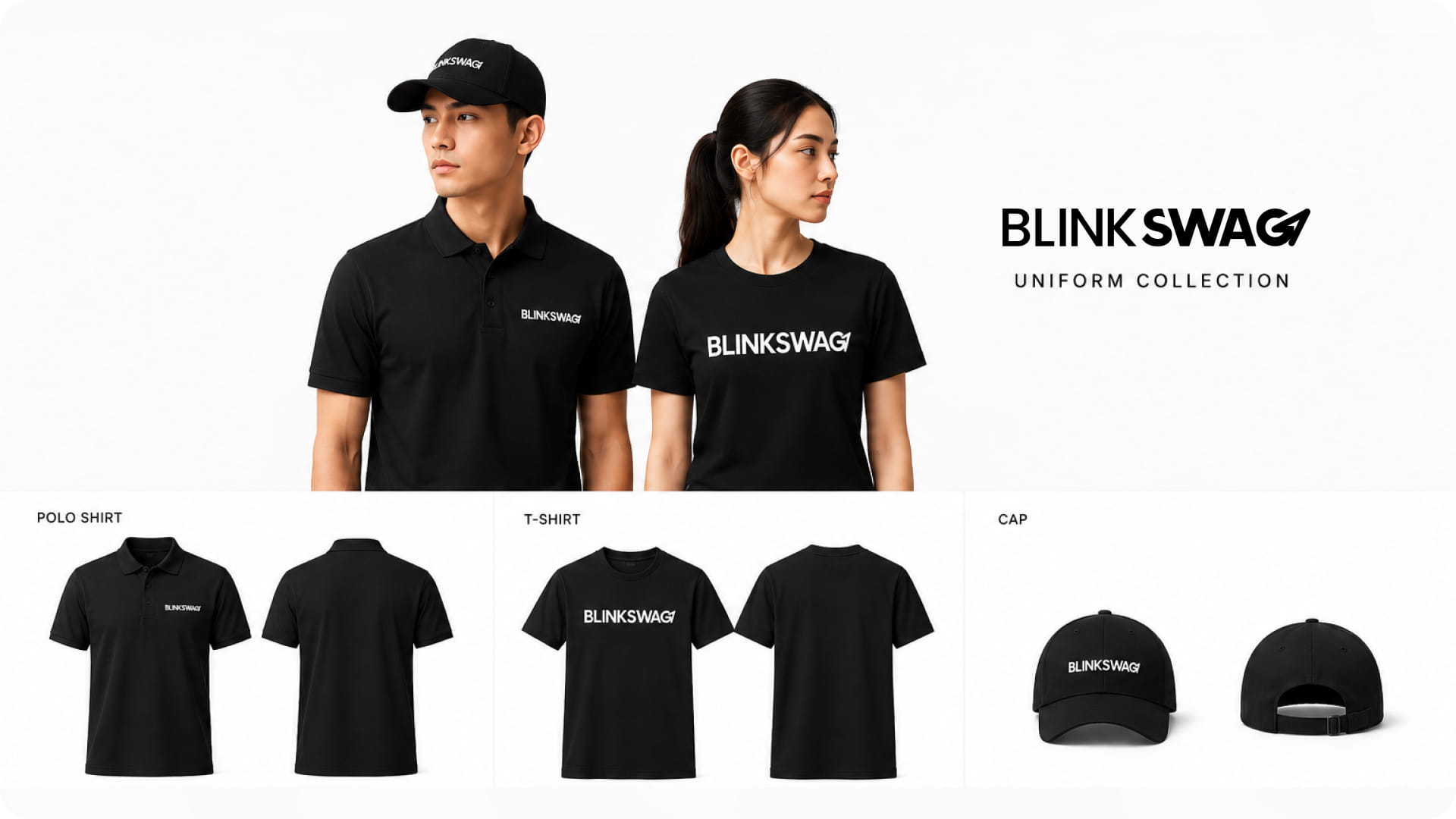
Uniforms must balance brand and comfort.
Key principles:
- Align with brand identity
- Design for role-specific functionality
- Create layered apparel systems
- Offer inclusive sizing
- Integrate recognition elements
BlinkSwag ensures consistency across all decoration methods and apparel types.
Case Study: US Storage
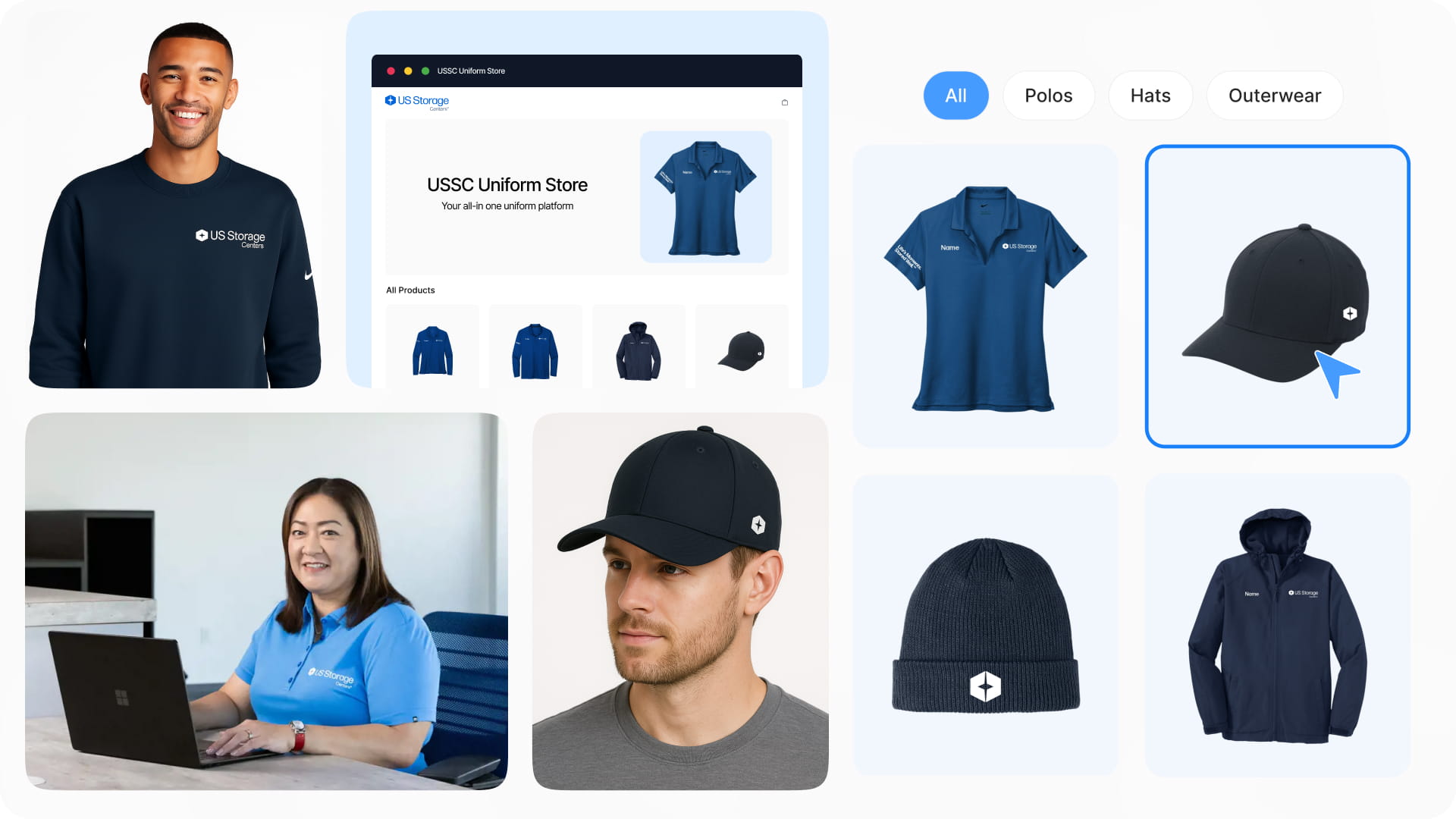
US Storage needed to standardize uniforms across multiple locations.
Challenges included:
- Inconsistent branding
- Fragmented ordering
- Lack of inventory visibility
BlinkSwag implemented:
- Centralized store
- Role-based catalogs
- Unified fulfillment
The result:
- Improved brand consistency\
- Simplified operations
- Better employee experience
The BlinkSwag Advantage: Uniforms + Swag in One System
Traditional model:
multiple vendors, systems, and workflows.
BlinkSwag model:
One platform for everything.
This enables:
Better Onboarding
Uniform + welcome kit delivered together.
Stronger Brand Consistency
All apparel follows one standard.
Simplified Operations
One system replaces multiple vendors.
Improved Employee Experience
One portal for all branded items.
Step-by-Step Implementation
- Assess roles and requirements
- Design apparel collection
- Configure company store
- Run pilot program
- Launch company-wide
- Optimize with reporting
Planning Checklist
- Define roles and apparel needs
- Confirm brand standards
- Set allowances
- Configure catalogs
- Validate sizing
- Test systems
- Prepare internal rollout
Common Mistakes
- Focusing only on price
- Ignoring sizing data
- Lack of budget control
- Fragmented vendors
- No optimization plan
FAQs
What is a managed uniform program?
A centralized system that controls how uniforms are designed, ordered, and distributed.
How do allowances work?
Employees receive budgets that are automatically enforced in the system.
How do companies manage multiple locations?
Through centralized platforms like BlinkSwag, with role-based controls and fulfillment.
Can uniforms and swag be combined?
Yes. BlinkSwag integrates both into one platform.
Conclusion: Uniform Programs as a System
Uniform programs work best when they are treated as a system.
Not a vendor.
Not a spreadsheet.
Not a one-time setup.
BlinkSwag brings control, efficiency, and brand consistency into one platform, connecting uniforms with onboarding, swag, and employee experience.
For organizations ready to scale, this is the difference between managing apparel and owning a branded ecosystem.